There are times when it is better to be lucky than good.
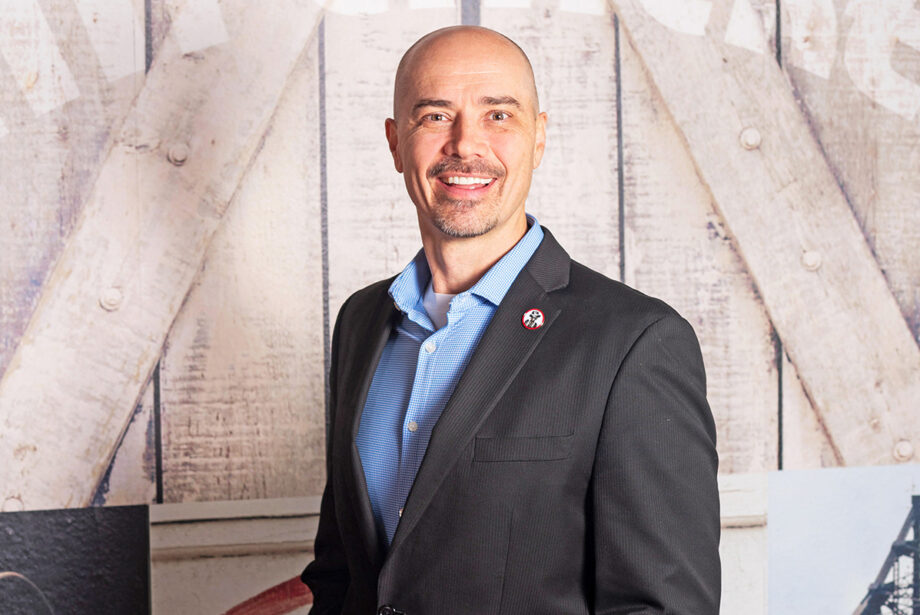
That’s not to say Seth Jensen isn’t excellent at his job as CFO for Slim Chickens in Fayetteville.
The Nebraska native has played a significant role in the growth of the restaurant chain, work for which he was named Arkansas Business’ CFO of the Year in 2018 for small to medium private companies.
But Jensen acknowledged a bit of good luck when it came to Slim Chickens’ financial foundation when the COVID-19 pandemic arose. The pandemic has caused chaotic economic effects, none felt more acutely than by companies in the restaurant industry.
Like many other CFOs, Jensen had to help his business adapt to a new model. His efforts were a bit easier because, in July 2019, Slim Chickens acquired a minority investor, 10 Point Capital of Atlanta, which invested a reported $30 million in the company.
“No one could have predicted that nine months later we would have been in a materially worse position from a financially stable and healthy standpoint,” Jensen said. “That was just good fortune. I can’t tell you that was in my strategic planning, ‘Well, when COVID hits, we are going to need to have capital.’”
Slim Chickens, like many restaurant companies, had to adjust its business model on the fly, starting curbside pickup and home delivery while reducing in-restaurant dining capacity. The new business models aren’t simple changes, and Jensen said it was important that his financial team understood the costs and rewards of each of the changes.
“The new business needs support, metrics and reporting to make sure we are doing it well,” Jensen said. “You take your restaurant from 100% dine-in capacity to as far as zero then back to 25 and then went to 50, and then we went back to 25 and then back to zero. You don’t want to shut down online ordering in all 50 states because one state decided dining rooms were closed. We have had to be nimble to make sure we were flipping the right switches at the right times.”
Federal Help
One of the ways the federal government tried to help during the crisis was through the Paycheck Protection Program overseen by the U.S. Small Business Administration.
The PPP initially caused some confusion because, early in the program, the rules and guidelines were moving targets, and many businesses had undergone pain during similar programs after the terrorist attacks of 9/11 in 2001.
“After 9/11, there were loan programs to stimulate the economy and SBA said, ‘Make loans. We will forgive them,’” said Pete Parks, a CPA in El Dorado. “When the forgiveness period came, SBA had placed criteria on lenders that hadn’t been followed because guidance hadn’t been in place.
“So now this time most of the lenders were a lot more cautious about it. There was probably a week or two lag because of cautiousness because of what happened 19 years ago.”
Slim Chickens applied for and received a PPP loan from the SBA. Jensen declined to disclose the exact amount, but SBA data confirms that it was between $2 million and $5 million. The SBA has said there will be a review process before loans of $2 million or more are forgiven.
Jensen said Slim Chickens had applied for loan forgiveness and he was confident that the company had complied with the SBA’s requirements for the loan’s use. Slim Chickens has not laid off any employees since the pandemic.
“That’s a source of pride for me,” Jensen said. “We did our best to play offense with it. We followed all the protocols and rules by the book and made sure we were doing it in the right way. The primary objective of PPP was to maintain your team members in place. It allowed us to cover those expenses they asked us to cover.”
Parks said that when PPP funds became available, many of his client companies contacted him for advice. Parks said one of his clients applied for a PPP loan, used the money and then realized that it wasn’t in line with the guidance the SBA later attached to the loan; the client repaid the loan without applying for forgiveness.
“This is intended for people who need the funds to stay in business,” Parks said, although the SBA did not include such restrictions in its eligibility parameters. “I’d say that two-thirds of the applications were made by people who didn’t absolutely need the funds to stay in business. They saw it as free government money if they do A, B and C.”
Rainy Day
Jenny Griffin said her company has survived the pandemic well so far but it reorganized the way money was spent.
Griffin, a two-time finalist for CFO of the Year , is the CFO for Performance Doors & Hardware Group in North Little Rock. PDHG provides doors and hardware for major construction projects and, while some projects have been postponed, the company is still operating through the pandemic.
“We had to keep a much closer eye than normal on cash,” Griffin said. “We switched to daily reports. We had more approvals in place for all cash outlays because we had to keep a strict eye that we weren’t going to run out of money.
“Even though things have been financially healthy for us, we still want to keep a really close watch on it. We can still be feeling the effects of it a year or two after the fact.”
PDHG also applied for and received PPP funds, which Griffin said allowed the company to give hazard pay to its workers who couldn’t stay home. The company also recently submitted a loan forgiveness application.
Jensen said a favorite quote from the Roman poet Horace is summarized like this: “Adversity reveals genius. Prosperity conceals it.” The same can be said for accounting: A good economy can conceal sloppy bookkeeping.
“The pandemic has proved the importance of financial discipline when things are going well,” Jensen said. “That is exactly what we are seeing. COVID put a magnifying glass on our industry, because for those that were struggling and didn’t have their affairs in orders, so to speak, they didn’t fare as well. Change causes disruptions and disruptions cause inefficiencies. Those inefficiencies need to be identified quickly so they can be addressed.”
 Sign up for Daily E-news