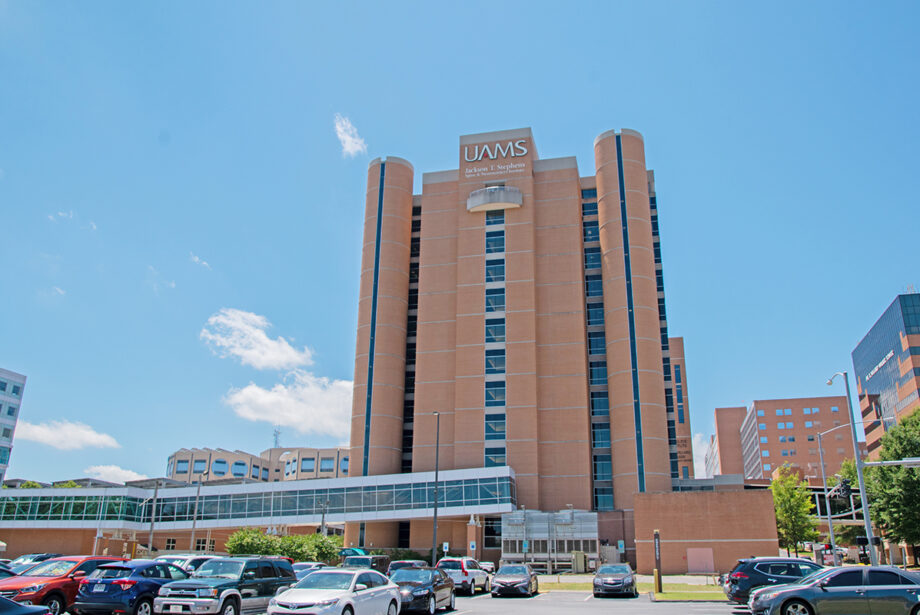
The UAMS Institute for Digital Health & Innovation has received a five-year, $3.18 million grant from the U.S. Department of Health and Human Services to create a program in Little Rock schools that will aim to help students learn better communication skills, including conflict resolution, relationship building and critical decision-making.
The REAL (Respect, Empowerment, Awareness, Life) Deal program will help students learn and practice communication skills to help navigate friendships, dating, family dynamics and their future careers.
It will be offered through the Little Rock School District’s Accelerated Learning Center and Hamilton Learning Academy through a series of 16 curriculum-based workshops throughout the school year, as well as summer youth programs with the City of Little Rock. The Little Rock School District includes 36 school campuses serving nearly 20,000 students.
“The idea behind the REAL Deal is about giving students the kind of practical, real-life relationship skills that make everything else in their world easier — how they communicate, handle conflict, make decisions and recognize what’s healthy versus harmful,” Julie Trammell Sheppard, project director and grant manager with the institute, said in a press release. “The whole idea is to give students a safe, supportive place to learn how to build healthy relationships, manage emotions, communicate clearly and avoid situations that can escalate into conflict or harm.”
Additional partners for the REAL Deal program are the Arkansas Relationship Counseling Center, Arkansas Commission of Child Abuse, Rape and Domestic Violence, The Center Against Family Violence and the Arkansas Coalition Against Sexual Assault. Two full-time social workers will also be hired to help implement the program and provide support.
The program’s first year will involve finalizing curriculum and hiring and training staff before beginning implementation with students. The next two years will include reaching more students, expanding the curriculum and adding options like peer leaders, career-readiness activities, weekly check-ins and opportunities for students to get involved outside of the classroom.
The final two years will focus on long-term stability to ensure that school district staff can sustain the program into the future.
Crystal Green-Braswell, director of culture, climate and well-being in the Little Rock School District’s Division of Teaching, Learning and Leading, will lead the program on the school district side.
The program will also be implemented at two Little Rock community centers via a partnership with the City of Little Rock’s Parks & Recreation Department. Workshops will be embedded into existing after-school and summer enrichment programming.
Sheppard said in the release that in addition to strengthening skills, there’s a more immediate benefit for school safety as well.
“When students know how to handle conflict, things deescalate much faster,” Sheppard said in the release. “When they understand what abuse looks like, they’re more likely to speak up, and when they feel supported and connected, they stay engaged in school instead of pulling away.”
 Sign up for Daily E-news