THIS IS AN OPINION
We'd also like to hear yours.
Tweet us @ArkBusiness or email us
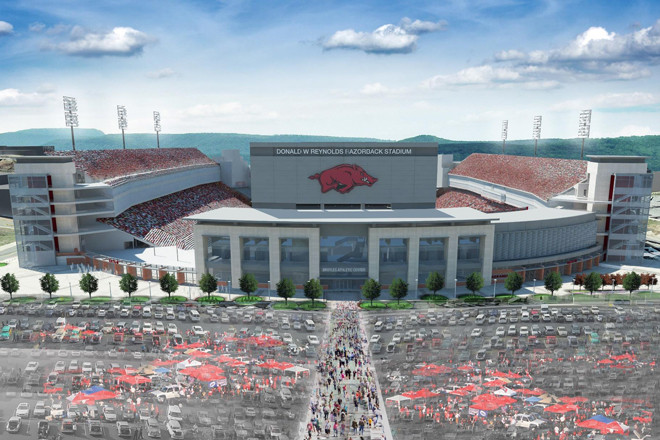
The fact that a majority of the trustees of the University of Arkansas System voted to use the university’s credit to do a breathtaking $160 million upgrade of Reynolds Razorback Stadium in Fayetteville is neither surprising nor disturbing.
The new seats and suites will be paid for by the high-dollar Razorback fans who are driving the market demand for such amenities. And if they don’t — if the cost of repaying the bonds actually falls on UA students and taxpayers — it will be because so much has gone so wrong in our economy that a football stadium will be the least of our financial worries.
So renovate the stadium with our blessings, and enjoy the luxury experience in good health and high hopes.
But the discussion that slowed what might have been expected to be instant approval of the investment followed by a rousing Hog Call was both healthy and important, and we have David Pryor, the former senator and governor, to thank for that. It suggests that the financial concerns and priorities of the students and their parents — not just the big donors — are being heard and considered.
In a state in which half of all households earn less than $40,500 a year, the estimated cost of an in-state resident attending the university attached to Razorback Stadium has crept up to $23,500 per year. (In-state residents represented less than half of the 2015 freshman class because the UA offers taxpayer-subsidized in-state tuition rates to qualified students from the six contiguous states plus Kansas and, starting this year, Illinois.)
The cost of the stadium improvements is significant and eye-popping and it says a lot about our state’s priorities. But having that settled should not allow the UA trustees, or the trustees of any other Arkansas college, to lose sight of a far, far bigger issue: The cost of higher education that is burdening families and sending too many of our best-educated young adults into the workforce already deeply in debt.
 Sign up for Daily E-news