THIS IS AN OPINION
We'd also like to hear yours.
Tweet us @ArkBusiness or email us
Famous person: “Buy this product!”
Consumer: “Why?”
Famous person: “Because I said so.”
Have you purchased a product or service because of a celebrity endorsement? You may have, without knowing it. That’s because endorsements, from celebrities, or from others who have used the product (usually through comments or customer ratings on social media), provide credibility and legitimacy aiding the purchasing decision — consciously or subconsciously. Research shows celebrity endorsements do not necessarily create or perpetuate brand loyalty, but are a “powerful and useful tool that magnifies the effect of the campaign.” The advertising campaign, that is.
Products need brand attributes. And one attribute is consumer confidence. Consumers want to be confident about the performance of the product, as well as associating themselves with a winning brand personality. Some marketers believe the quickest and most effective way to cloak a brand with personality is to associate it with a popular, famous name: a celebrity. Because, as Forbes recently reported, citing Ad Age, consumer audiences are bombarded by more than 3,000 advertisements a day across all media platforms. This type of exposure, or overexposed clutter, cries out for differentiation. To break through and accomplish the first job of advertising, which is to get your attention, the use of a well-known, well-liked figure grabs that sought-after attention. Then the brand can tell its story.
One key to consider: The celebrity endorser’s personality or own personal brand attributes must match the attributes of the product and appeal to the same target audience as the product itself.
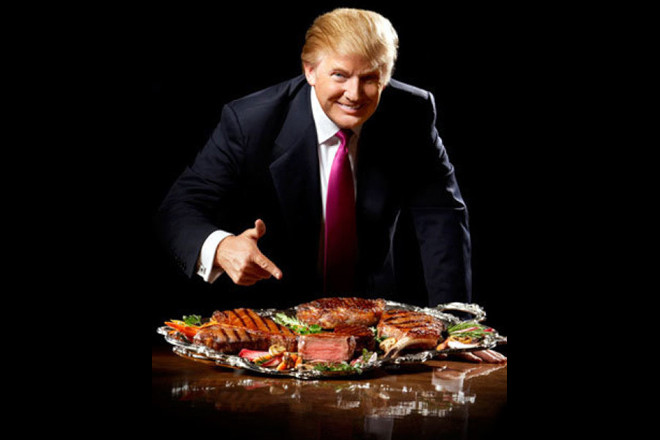
Arguably one of the most famous people, personalities or personal brands today is the current president of the United States, Donald J. Trump. And he is indeed a brand, labeling TRUMP ubiquitously.
In this space on Aug. 3, 2015, and again on Nov. 7, 2016, we discussed the Trump brand and its worth and value to global audiences. Now comes Simmons Research, a New York consumer research company that in March conducted a survey to measure a current snapshot of the Trump brand vis-à-vis its effect on consumer behavior.
Commenting on the survey, NBC News stated that some Oval Office watchers worried Trump would use his “elevated stature” to embellish his personal association with products, either through tweets, casual comments or intentional mentions of “winners and losers.” Simmons has fairly put that concern to rest. At least for now.
In the survey, respondents were asked three questions:
- Would you be more likely to use a product endorsed by President Trump?
- Would you be less likely to use a product endorsed by President Trump?
- Would you actively boycott a product endorsed by President Trump?
The results were telling on the status of the Trump brand and the persona behind it. More than 49 percent said they would be less likely to use a product if endorsed by Trump, and 29 percent would actively boycott the product. Only 18 percent said they would be more likely to use the product if it were endorsed by Trump, the president of the United States, commander in chief and leader of the free world.
By political party, it is no surprise that 71 percent of self-identified Democrats would be less likely to use a product endorsed by Trump. But 34 percent of Republicans would either be less likely to use or would even boycott the product, with 31 percent stating they would be more likely to use it. Independents weighed in with 55 percent less likely to use a product endorsed by Trump the man or Trump the brand.
CEOs of consumer companies, too, should take heed. The survey revealed 34 percent would prefer not to buy a product if the CEO of the company making or marketing the product supports Trump. And 30 percent would even pay more for a competing product.
The singular point is this: In consumer marketing, the power of endorsement is clear. It can clarify a consumer’s initial approach to or recognition of a product or service. It can add personality and value to a product, introducing the product to the consumer and inviting trial. As creative types like to say, “It cuts through the clutter.”
All true. Like most experiences, however, influencers and influences work in at least two measurable ways: positive or negative. Consumers will respond in kind.
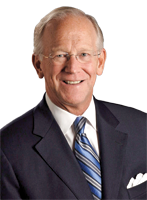 |
Craig Douglass is a Little Rock advertising agency owner and research and marketing consultant Email him at Craig@CraigDouglass.com. |
 Sign up for Daily E-news