THIS IS AN OPINION
We'd also like to hear yours.
Tweet us @ArkBusiness or email us
The multitude of grievances listed by Thomas Jefferson in the Declaration of Independence were designed by King George and his colonial governors to deprive Americans of their very life, their liberty and free exercise of choice, and their individual and corporate pursuit of happiness.
But what of happiness? Collaborative authors appearing in the Journal of Consumer Research suggest that some consumers define happiness as an emotion of excitement. Others experience happiness as serenity or peace of mind, a calm. The researchers discovered a binary approach to happiness manifested in a back-and-forth experience of either excitement or calm, depending on the given moment. And in that particular moment, consumers make different choices. Either way, however, the result is happiness. Jefferson believed we Americans have the inalienable right to pursue it.
Now, the English philosopher John Locke, who greatly influenced Jefferson and the American Revolution, coined in the late 1600s the phrase “pursuit of happiness.” He also equated happiness with, among other things, the free pursuit of property (or “estate”): real property, things, goods and the like, and the freedom to choose, to be independent. In fact, in an early draft of the Declaration, Jefferson wrote, “… all men are created equally free and independent.” He shortened the phrase.
During this Fourth of July celebratory week (and every week of the year, for that matter), consumers across America will be exercising their independence in the marketplace. We will choose to take Thursday and, most likely, Friday off from whatever we routinely do, and do something different. We may shop, but we may not. Either way, we will salute in some manner the notion of consumer independence. Allow me to explain.
Ours is a consumer economy based on free-market capitalism. It’s how we choose to operate. Inherent in this approach is the driving notion of value. And value, like happiness, means different things to different people.
Back to Locke and Jefferson. In the Declaration, Jefferson speaks of unalienable rights (or inalienable). Those are the rights of freely possessing and enjoying nature, beauty, love, knowledge, health. They are inalienable, and thus incapable of being alienated, surrendered or transferred. There exists, too, alienable rights or the possession of goods that are capable of being transferred: products and services that can be bought, sold or traded. The choice is up to us, and many of us pursue both, depending on the particular moment.
How we consumers make these choices comes under the theory and practice of consumer preference. And consumer preference, in many if not most cases, depends on our accedence to social influences and how we choose to conform to those influences, or be a nonconformist.
Whether we are aware of it or not, whether we like it or not, consumers toggle between conformity and nonconformity. Our conformity to social influences results in a type of materialism or consumerism that is conscious of status. How will the product I purchase make me look to others? What does it say about my success? And, subconsciously, is the ego satisfied by this outward sign of inward confidence and perceived prestige (most often a false internal assessment needing support from external things)?
On the other hand, the nonconformist consumer exhibits independence by exchanging status for personal satisfaction and happiness. Or true value versus external wealth, real or not. The former could be called a false self, while the latter a true self. Tough decision.
So, Rolex or Timex? Thanks to the founding fathers and mothers, the Committee of Five who worked with Jefferson on the Declaration of Independence, the courage of the American Revolution and the brilliance of the Constitution, you get to choose. It is both your inalienable and alienable right. Celebrate it!
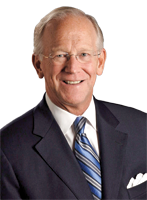 |
Craig Douglass is executive director of the Regional Recycling District in Pulaski County. Email him at Craig@CraigDouglass.com. |
 Sign up for Daily E-news