THIS IS AN OPINION
We'd also like to hear yours.
Tweet us @ArkBusiness or email us
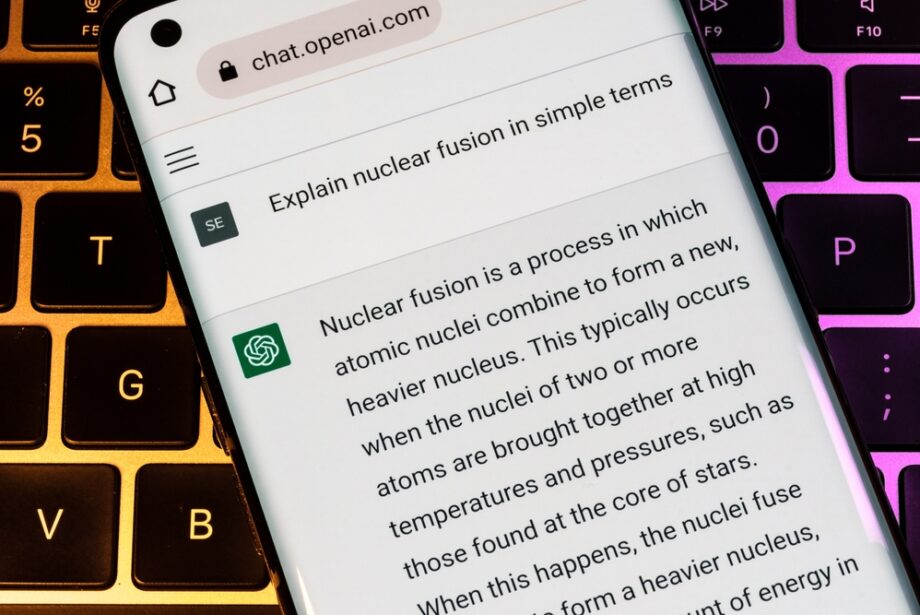
ChatGPT, developed by OpenAI, is a cutting-edge language model that has the ability to generate human-like text. With its advanced natural language processing capabilities, ChatGPT is able to understand and respond to a wide range of questions and prompts.
This technology has the potential to transform industries such as customer service, marketing and content creation. As ChatGPT continues to evolve and improve, it raises important questions about the role of AI in society and the future of human-machine interaction. Despite its potential, it will be crucial to consider the ethical implications of relying on AI for important tasks.
***
I would not have thought that the biggest battle in tech in 2023 would be over search, but here we are.
Last week, Alphabet Inc. and Microsoft Corp. held competing press events about how their respective search engines, Google and Bing, would integrate technology like ChatGPT.
Users could ask questions — “Where should I go on an anniversary trip within three hours of here?” or “How do I center text in HTML?” or “Give me a workout I can do at home.” — and get clever, well-written and conversational responses rather than simply a list of webpages and related ads. Microsoft showed how users could use AI in its software suite to quickly summarize documents or help you write emails, blog posts or key paragraphs.
Both companies are scrambling since OpenAI Inc. launched ChatGPT in November and users were blown away by its responses. (You can try it out at chat.openai.com.) Certainly, there are times when AI provides incorrect, incomplete or sometimes offensive responses. Tech news site CNET found that out the hard way — it had been quietly using a custom AI to write entire articles but paused the effort when it discovered that some of them contained errors.
But services like ChatGPT are so obviously the future that Alphabet, sensing a possible threat to its long-dominant cash cow, summoned co-founders Sergey Brin and Larry Page back to the office to help the company add its own chatbot AI, called Bard, to Google services. Microsoft, having already invested $1 billion in OpenAI in 2019, quickly leveraged that advantage, locking down ChatGPT tech for its products and proposing a deal to invest $10 billion more into the company. Suddenly Bing, an also-ran search engine with single-digital market share, is relevant.
Like robotics and automation, artificial intelligence is poised to upend the world as we know it. Having survived a pandemic that threatened companies’ most valuable asset — people — companies have a renewed interest in exploring and investing in those technologies.
Innovations are about to come fast and furious and may surprise many of us, like me, who thought a machine could never do our job. Last week, I logged into ChatGPT and asked it to “write a 70-word lede for a column about ChatGPT.” Its answer is the first two paragraphs of this column.

 Sign up for Daily E-news