THIS IS AN OPINION
We'd also like to hear yours.
Tweet us @ArkBusiness or email us
This is the 22nd year-end issue of Arkansas Business that I have overseen as editor. The first was in 1999, just months after I returned to my hometown after a decade of exile in Tennessee, and I took the staff’s word for it that the revitalization of Little Rock’s River Market District was the top business story of the year. It certainly was an improvement over the warehouse district I had tried to avoid, years earlier, as a reporter for the Arkansas Gazette.
Closing out the year with a roundup of its top 10 business stories was a tradition I inherited, and we kept it up. The top story in 2000 — the rabid intrastate dispute over University of Arkansas Athletic Director Frank Broyles’ proposal to reduce the number of football games played in Little Rock — seemed embarrassingly petty a year later, when the dust was still settling months after 9/11.
But even in 2001, we ranked 10 stories: the terrorist attacks, the economic recession that had actually begun months earlier, Tyson Foods’ acquisition of South Dakota beef and pork giant IBP Inc. (accompanied by a case of buyers’ remorse), etc. Year after year the staff wrangled over that top-10 list, settling on the biggest stories and ranking them.
I never imagined that I would experience a bigger news story than 9/11, which killed 2,977 Americans in a single day. But COVID-19, a disease few of us had heard of at this time last year, has killed 100 times as many in less than a year, and sometimes more on a single day. Absolutely every major story of the year — even massive civil protests, even the presidential election that the loser contested (maybe just to elicit donations) — has been shaped by the COVID context.
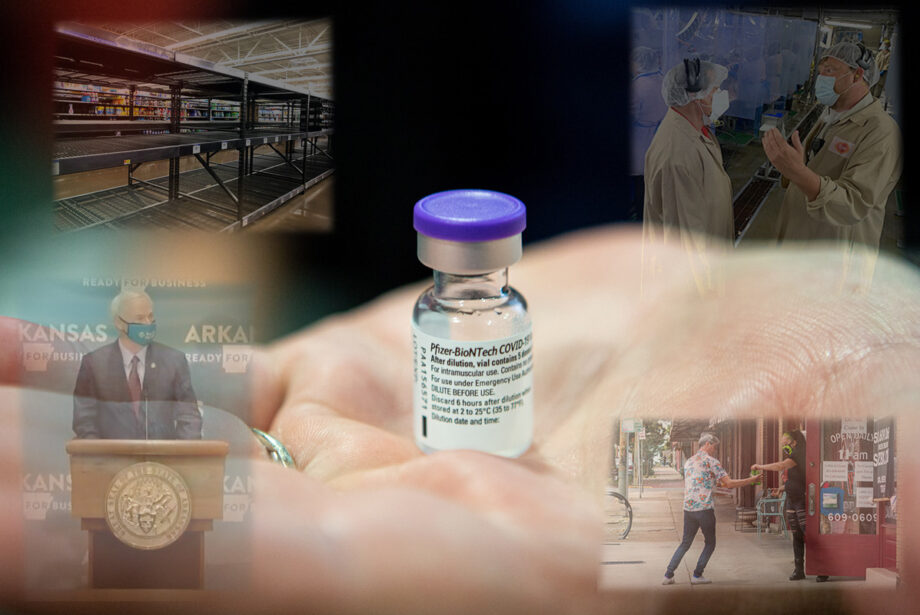
So this year, the reporting staff decided to acknowledge the obvious: There was only one big story this year. The pandemic is the biggest story in banking, health care, retail, manufacturing, transportation, hospitality, construction, real estate, education, law, government and more. It has pressured the private sector, the public sector and nonprofits. It has tested our emergency preparedness, our contingency plans and our analytical skills. It has revealed weaknesses in our supply chain, accelerated trends in e-commerce and underscored our state’s shameful “digital divide.”
It has also revealed the truth of that cynical old joke: “The death of one man: this is a catastrophe. Hundreds of thousands of deaths: that is a statistic!”
There is light at the end of the tunnel with the rollout of vaccines last week, but it will take months for all willing Americans to roll up their sleeves. For the present, some 200,000 Americans are diagnosed every day and about 2,500 die of COVID every day. Tens of thousands more deaths are predicted, even in the most optimistic forecasts, before we get this thing under control.
And we will get it under control eventually. But it will take longer than it should, and more lives will be lost than necessary, because of the other thing that COVID has announced in neon: Our society is swimming in disinformation.
Even when President Trump leaves office — he who minimized the risks that he fully understood and mocked Joe Biden for wearing a mask — the problem of disinformation will remain. There is no vaccination against this infection in our body politic.
Tom Nichols, a professor in the Department of National Security Affairs at the U.S. Naval War College, published a book in 2017 called “The Death of Expertise: The Campaign Against Established Knowledge and Why it Matters.” In it he warned, “These are dangerous times. Never have so many people had so much access to so much knowledge and yet have been so resistant to learning anything.”
If that seems prescient, consider this: Nichols’ book expanded on an article he wrote for conservative website The Federalist in 2014. Also called “The Death of Expertise,” that article included an even more prescient example: “To take but one horrifying example, we live today in an advanced post-industrial country that is now fighting a resurgence of whooping cough — a scourge nearly eliminated a century ago — merely because otherwise intelligent people have been second-guessing their doctors and refusing to vaccinate their kids after reading stuff written by people who know exactly zip about medicine.”
This is not the last publication subscribers will receive from Arkansas Business this year. Next week you’ll get the “2021 Book of Lists,” that indispensable compilation of business lists we’ve produced throughout 2020.
Will I take the vaccine when my turn rolls around? I pity the fool who tries to stop me.

 Sign up for Daily E-news