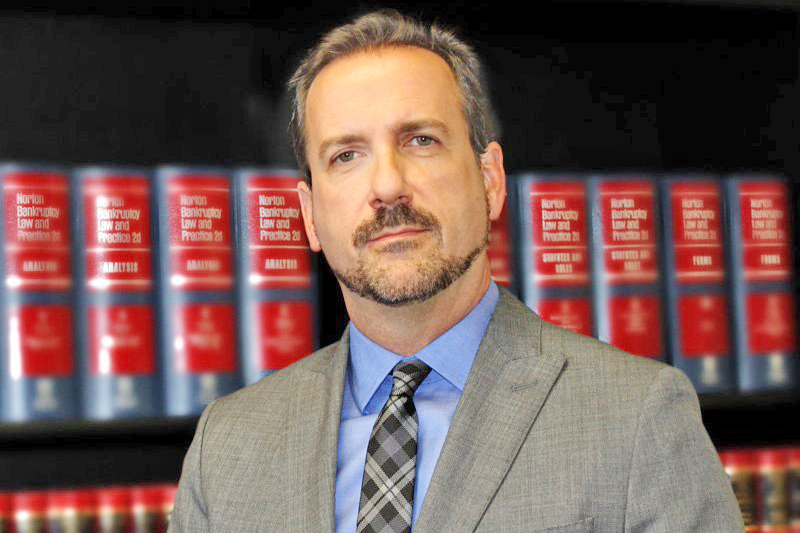
Stanley Bond
Arkansas attorneys are bracing for a surge in bankruptcy filings as a result of the financial upheaval of the coronavirus pandemic, and they aren’t alone.
“Everyone expects a huge wave coming both of large filings and particularly small-business and individual filings,” said Anthony Casey, a University of Chicago Law School professor who teaches and writes about bankruptcies.
“In the past, filings have been correlated with unemployment,” he said. “If that correlation sticks — obviously unemployment is at record highs — we would see an enormous increase.”
The national unemployment rate jumped to 14.7% in April, a level not seen since the Great Depression. The rate had been at a half-century low of 3.5% in February.
Casey expects that the first wave of companies to file for bankruptcy protection will be businesses that were already in financial trouble before the pandemic hit, such as the high-end retailer Neiman Marcus, which filed for Chapter 11 reorganization earlier this month.
The next wave will be companies and individuals who would have been fine financially except for the pandemic.
Attorney Stanley Bond of Fayetteville, whose practice includes bankruptcies, has seen his call volume increase with bankruptcy questions since the middle of April. “We’re hearing from individuals and businesses and individuals engaged in business,” he said.
Kevin Keech, a Little Rock bankruptcy attorney, said he expects companies that choose Chapter 11 reorganization to take advantage of the Small Business Reorganization Act, which went into effect recently.
To qualify for the benefits under the legislation, which makes the rules of Chapter 11 more favorable to the debtor, a company has to have less than about $2.7 million in debts. That maximum limit was temporarily increased to $7.5 million under the Coronavirus Aid, Relief & Economic Security Act passed in March, which will make the reorganization more attractive to more companies.
“Businesses that really didn’t have a strong chance at reorganization before this legislation passed are going to probably have a much stronger ability to reorganize their debts under the new legislation,” Keech said.
Casey said the SBRA helps keep the small-business owner in place, if the company is viable. “In the past, it was more likely that you’d push them out and shut down,” he said.
But even SBRA and CARES may not be enough for companies in the sectors that have been hit hardest by the pandemic, such as restaurants, because it’s unknown when their cash will start flowing again.
A debtor can’t restructure a lease in bankruptcy without the landlord’s consent, Bond said. “You can pay the back rent in different ways, but you can’t say my rent is going to be half of what it was, unless that landlord consents,” Bond said. “So you’re stymied there.”
For a restaurant, other than rent and payroll, the two largest creditors are its food and alcohol suppliers. “And without them, you’re dead in the water.”
“How to finesse those things going forward is going to test the mettle of many people in this profession and also in the restaurant business,” Bond said.
Casey offered some words of comfort: Chapter 11 means restructuring and not the end of a company.
“It’s not something to be feared,” he said. “It’s also not something to be rushed into.”
The uncertainty surrounding the pandemic makes decisions difficult.
“So you want to get as much information and try to find out what resources are, or will become available, before making a final decision,” Casey said.
A Spirit of Cooperation
Kelly McNulty, an attorney at Gill Ragon Owen of Little Rock, said he’s advising that landlords be prepared for the coming bankruptcies and that they get their documents in order.
“Landlords have to be ready to address their lease in the bankruptcy and take certain steps to get possession back quickly,” said McNulty, who represents banks.
In the meantime, most lenders are working with borrowers and will agree to accept a percentage of the loan for a time in exchange for some covenants and warranties, McNulty said.
“Talking to my clients right now, there seems to be — more so than back in 2008 — a spirit of wanting to work with borrowers and cooperation,” he said.
During the Great Recession, the borrower was blamed for making a bad decision.
“Now, it’s not their fault,” he said.
 Sign up for Daily E-news