THIS IS AN OPINION
We'd also like to hear yours.
Tweet us @ArkBusiness or email us
Content is king! Content, as used in consumer marketing, doesn’t just mean “what’s inside the package?” It means, as my Business Dictionary puts it, information as well as communication. “The sum total of the freshness, readability, relevancy, and usefulness of the information presented, and the manner in which it is presented.” That’s content. Done well, content is both the attraction and the promotion.
We’re bombarded with content. Frivolous and sensible. Impractical and rational. To be sure, in the quest to transcend this clutter, many marketers feel the need for content to entertain. Perhaps a good idea. But not in isolation. Not entertainment for entertainment’s sake.
Effective content’s objective is not to just grab attention, but to hold it. Grabbing alone doesn’t support the brand; it supports the ad. Today’s communications vehicles — advertising, online engagement, third-party authenticating, social media blogs and posts, publicity, promotion and more — have a number of hoops through which they must jump to define and sustain a brand. And that begins with inviting and building a relationship with the target consumer.
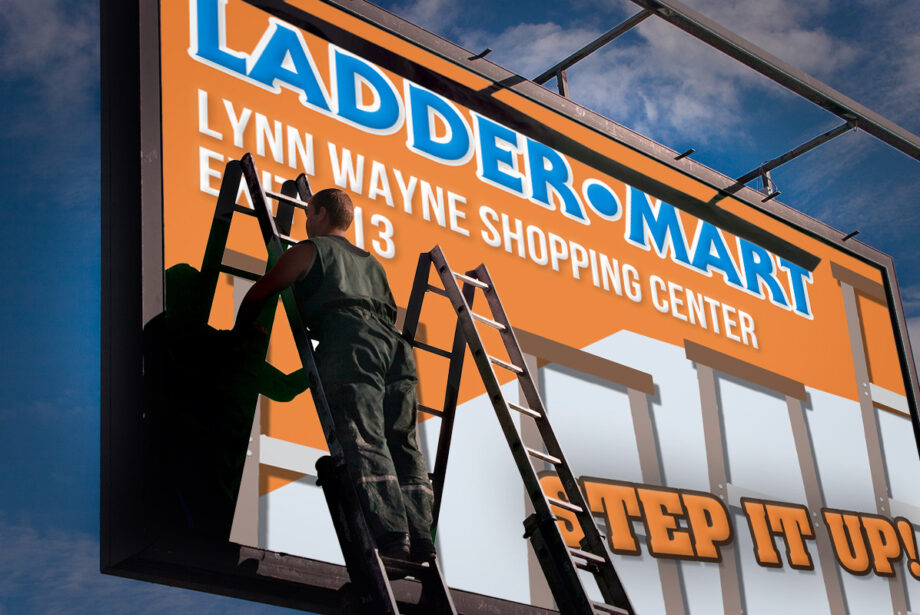
Thales Teixeira (I have no idea how to pronounce that name), associate professor of business administration at Harvard Business School, suggests a concept he calls “building a ladder of engagement.” It’s not a one-off effort, but a step-by-step approach to consumer marketing and the communications part of that discipline.
“The height of the first step has to be very, very small,” Teixeira says. That’s why many advertisers are using short ads rather than the traditional 30-second spot, or 15-second spot, for that matter. The six-second ad seems to be a new form, depending on the platform in which it is placed.
Just as grabbing attention is not to be pursued in a vacuum, “sixes,” as they are called, should be part of a broader campaign. My take on it is that sixes can be the equivalent of a movie trailer, drawing in or inviting the consumer to learn and experience more through a longer-form message. The longer form can either lead the consumer to a website or landing page, or tease a second and third advertisement in an obvious series of messages through which consumers can learn more. The form of the ad, if electronic, can move from a six-second to a 15-second to a 30-second message (or longer). Online it can be longer still, once the initial clip is adequately promoted.
There is nothing really new about this sequential approach to messaging. What is new is the use of other media platforms to attempt to reach target consumers where they are. And with more platforms comes more content — and more and more bombardment.
Laddering has been used in focus group research for years. The process is to elicit what is surely a surface opinion, and then go rung by rung by way of cumulative questioning, the next question building on the previous one, to uncover the core motivation for the opinion.
That core, more often than not, reveals some level of a perceived personal benefit: “What’s in it for me?” That’s what laddering and building a ladder of engagement is all about. We move from functional benefits to emotional benefits. Now we’ve got you!
This consumer benefits ladder, according to Graham Robertson, founder of Beloved Brands Inc., a brand-consulting firm, has four steps:
- Conducting research to specifically define the target consumer;
- Focusing on brand features that ensure a competitive edge;
- Putting yourself in the target consumer’s shoes to discover functional benefits; and
- Discovering how the functional benefits make the consumer “feel,” uncovering emotional benefits.
A number of years ago, I developed a similar outline that asks five simple questions:
- Who are we trying to reach?
- What do we want them to do?
- What’s in it for them?
- What are the facts?
- What are the mandatories?
Same thing. It’s not unlike an education classroom concept called the Ladder of Feedback. The idea is this, and nothing more: that constructive feedback, in a structured setting, informs, clarifies, values and suggests. All relationships, whether between a brand and a consumer, or between you and me, could use a little more of that.
 |
Craig Douglass is executive director of the Regional Recycling & Waste Reduction District in Pulaski County. Email him at Craig@CraigDouglass.com. |
 Sign up for Daily E-news