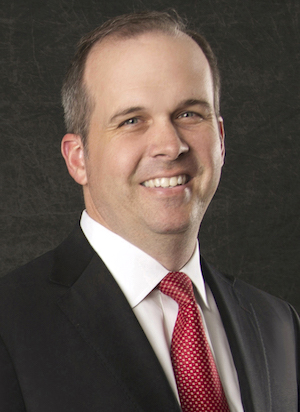
H. Wayne Young
The issues surrounding terminating an employee who participates in rallies involving hate groups could be puzzling. Arkansas Business recently asked H. Wayne Young, who is a partner with the law firm Friday Eldredge & Clark in Little Rock and is a member of its Labor and Employment Law Practice Group, for his thoughts.
Here are his emailed responses:
Arkansas Business: Do protesters who appear in photographs and are tied to white nationalist groups have job protections? Could they be fired if their employer sees them in a photo?
Young: Arkansas is an at-will employment state, which means either the employer or the employee can end the employment relationship for any reason so long as the reason is not illegal. It would generally not be illegal to discharge someone because of off duty conduct the employer found objectionable.
There are exceptions, however. One exception would be a discharge for off duty conduct that is legally protected. An example might be where an employer fired an employee for attending a religious observance on his day off because religion is a legally protected category under discrimination laws.
Another could be where an employee is advocating for higher wages. This is because an employee’s speech related to wages, hours or working conditions is considered “protected concerted activity” under the National Labor Relations Act. Even there, however, the fact situations and legal interpretations can vary widely from case to case. Thus, we would always advise consulting an attorney before making an employment decision based on what an employee said or did off duty.
What if the employee is a government employee?
The answer could be very different. Public employers have different rules than private employers because they are uniquely subject to many constitutional provisions, such as the First Amendment which does not apply to private employers, that protect the rights of employees as well as specific state and federal laws that protect public employees.
We would advise public employers and employees to consult with their human resource manager or counsel for advice on how these provisions impact specific off duty conduct.
Also, let’s say a protester is in a photo that is widely distributed on social media. And that person is or becomes a supervisor, could that be a potential liability for his employer if one of his subordinates brings a Title VII (which is Title VII of the Civil Rights Act of 1964 that bars employment discrimination based on race, color, religion, sex or national origin) complaint?
Likely not just based on the photo alone, but it would be an issue the employer should address. The concern would be if the supervisor ended up being the decision maker on a discharge decision that was challenged because the employee believed the discharge was because of his Jewish religion, for example, as opposed to absenteeism, poor attitude or whatever non-discriminatory reason the supervisor gave.
In this example, let’s say the social media picture was the supervisor carrying a Nazi flag. That picture would be used as evidence to prove the bias of the supervisor as it related to the decision to discipline or discharge the Jewish employee. If an employer becomes aware of any conduct, on or off duty, that runs afoul of its EEO policy or philosophy, they would be wise to address that issue as soon as possible with the assistance of employment counsel.
Is there any other things an employer should consider before firing an employee?
With any discharge decision, be as diligent as you can to get as many facts as you can about the situation before you make a final decision. This includes getting the employee’s side of the story before making a final decision.
Often employers make the mistake of making a quick, emotional decision at the expense of knowing all the facts. Good diligence often saves the employer from making a legal or factual mistake. As an example, recall the individual in the University of Arkansas Engineering shirt in Charlottesville was originally misidentified. What if his employer had simply discharged him before that came out? When a discharge is challenged, often the case comes down to how good of a job the employer did in investigating the situation.
Finally, having the assistance of a professional, like an attorney, can provide a helpful objective set of eyes to a scenario.
 Sign up for Daily E-news