THIS IS AN OPINION
We'd also like to hear yours.
Tweet us @ArkBusiness or email us
The White House Office of American Innovation. Wow! Great name. American innovation: Whitney, Carver, Edison, Wright brothers, Stephanie Kwolek (DuPont/Kevlar), Steve Jobs and Bill Gates.
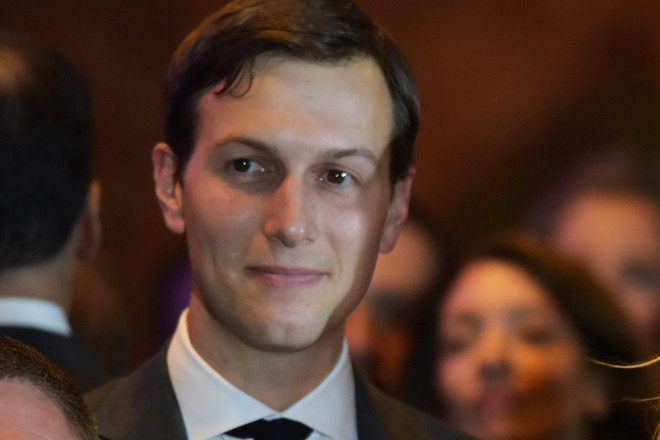
By way of a March 27 memorandum by President Trump, the Office of American Innovation was formed inside the White House, to be led by the president’s son-in-law, Jared Kushner (consort of Ivanka). The mission of the office was summed up in the last sentence of the memo’s first paragraph, “The office will focus on implementing policies and scaling proven private-sector models to spur job creation and innovation.”
Private-sector models: Sounds like we’re again promoting the notion government should be run like a business. Well, government is not a business. And since it isn’t, policymakers and implementers would struggle to make it run like one.
Here’s why:
Let’s think about profit. Efficiencies in business are driven by the desire to make and ever increase profits. Profits and the profit motive are not necessarily tied to, in the words of Forbes contributor John Harvey, “social value.” He said, “… not everything that is profitable is of social value, and not everything of social value is profitable.” But core services of government do have social value (see below). And none of these services is necessarily driven by profit. As we have recently seen, inclusive access to affordable health care is a difficult business enterprise where successful, business-like competition is hard to achieve.
And in the case of innovation, no right-minded, profit-oriented business would have or could have attempted to put an American on the moon. The government via NASA did, and the value of the endeavor continues to pay off today, profitless. Government performs numerous services the private sector won’t touch.
Three thoughts about privatization:
• Prisons have tried it and are now re-governmentizing their model. (Incarceration for profit is a peculiar idea vis-a-vis jurisprudence.)
• Public education, which has been around since the Boston Latin School was established in 1635, and ordained by Jefferson in his 1801 inaugural address as an “essential principle of government,” is critical to the success of republican democracy. Yes, private schools and government-funded-yet-independent charter schools provide choice. The fact remains, however, that free public education is a right, with the only profit being that of the benefits of a prepared mind.
• Highways, roads, streets and bridges are of the public domain, accompanied by a disdain for tolls by consumers, who are not desirous of being subject to paying for what they believe they have already paid for.
The operation of government, some have said, should be divorced from the purpose of government. Is a particular program a core service of government? If not, it should go, freeing up resources for other services, either new or improved, or reduced taxes.
Some core government services would never survive in a business enterprise environment. Invested in a private meat inspection company lately? Or trusted a publicly traded corporation to direct airline traffic at a crowded airport? (I would rather my safety rely on effectiveness than efficiency.)
Governments perpetuate themselves at every level. Next year’s budget is based on last year’s budget — with a little increase. Now, that’s neither efficient nor effective. So where innovation could come into play is by first understanding and determining the core functions of government (let’s say infrastructure, education and training) and quality of life (public safety, wages, health and health care, clean air and water, recreation). Then establish levels of service to ensure these core functions, assessing relative tax rates to fund the services. Add-ons are inevitable. But we could start here.
Jared Kushner stated, “Our hope is that we can achieve successes and efficiencies for our customers, who are the citizens.” Customers? Not quite. Taxpaying, voter-citizens are not customers. They are actually the stockholders/stakeholders who decide how the enterprise is to be run, and by whom. That enterprise is not a business: Our federal and state governments are tripartite systems of checks and balances — not a board of directors with a CEO.
As Philip Joyce, professor of public policy at the University of Maryland, said in an interview with the Wharton School, “Government was not set up to promote good things happening. It was set up to prevent bad things from happening.”
Few, if any, businesses are established with that mission in mind.
 |
Craig Douglass is an advertising agency owner, and marketing and research consultant. He is president of Craig Douglass Communications Inc. of Little Rock. Email him at Craig@CraigDouglass.com. |
 Sign up for Daily E-news