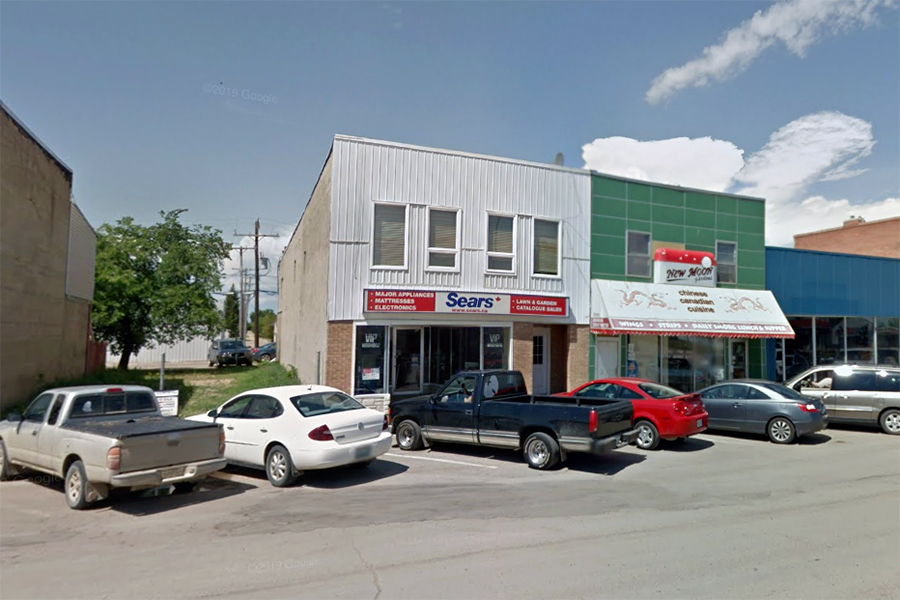
A Sears catalog sales merchandising store in Assiniboia, Saskatchewan.
THIS IS AN OPINION
We'd also like to hear yours.
Tweet us @ArkBusiness or email us
Consumers want what they want when they want it. It doesn’t take a focus group or random survey to know that. And with the advent of the pandemic, many retail marketers have stepped up their responses to cloistered consumer wants, if only out of a crystal-clear recognition that they either effectively respond, or perish.
Now, the trick is to understand what consumers want when many times consumers aren’t sure themselves. That’s why there is an evergreen devotion by marketers to what are known as the “four Ps.” They are product, price, promotion and place (place means distribution). This mix of consumer decision-making tenets was created in the late 1940s by a Harvard professor. Many appreciated then, as they do now, the simplicity of the framework.
But over the years, not satisfied with the elegance of the approach, others expanded it to seven Ps, adding process, people and physical evidence. Or even eight Ps, tacking on performance. Torturing the alphabet further, marketing theoreticians have created four Cs: consumer, cost, convenience, communication. So enough, already. Let’s keep it simple.
These days, given the convenience that technology has provided through online shopping, it may appear that the Ps are out of order, at least in the consumer’s mind. A case could be made for beginning with place — channel and distribution, how the product is presented and delivered.
We’ve written recently about the “explosion” of cardboard boxes now routinely showing up on doorsteps. The question is, will the exponential increase continue apace, sans virus? Or will it settle into a “not-in-lieu-of” phenomenon, but an “in-addition-to” in-person retail experience where both distribution channels are combined? What will become a consumer most?
The efficiency of retail space square footage in the form of strip centers, outdoor promenades, malls and the like has been challenged during the past several years by the rise in online shopping. Goods are warehoused, not displayed, save for a screen photo the viewer may “click for an expanded view” or “roll over to zoom.”
The product, and the promise of the brand, can’t be inspected, felt, tried on or otherwise experienced until it shows up at the door. And that can be a problem for exclusive point-and-click retailers and even retailers who are offering online shopping along with bricks and mortar — and the cost of rent, utilities and workers — foot traffic. “Shoppers return 5% to 10% of what they purchase in store, but 15% to 40% of what they buy online,” David Sobie, co-founder and CEO of Happy Returns, told CNBC in 2019. The reasons are obvious.
Seems to us the combination of spatial shopping and shopping through space (orbiting satellites are used, you know) can complement one another.
Why couldn’t retailers with large physical footprints downsize their square footage and offer various brands in a touch-and-try presentation? The larger-than-boutique-size merchants, whether a shop or a department store, could house samples of all products, perhaps in multiple sizes and iterations. Customers could experience the product in person and either buy immediately from a limited inventory or use a free-standing kiosk in the store to order it online for home delivery.
Retailers would then become displayers of the product, reduce price points consistent with the reduction in square footage and employee costs, promote the convenient marriage of in-person and online shopping with a real-shopping-experience feel and provide a variety of customer gratifications through at-once purchases with take-home or delivery-at-home distribution.
We do not know how the consistent increase in online shopping before the novel virus, and the dramatic increase since, will alter post-pandemic consumer behavior. Things may not be better or worse, but they will be different. What will remain, however, is the decision-making process consumers go through when selecting a store brand and a product brand. The choice will most likely be based on how product or price are promoted, and then determined by place. Do I point and click, or touch and try? Or both?
Smart retailers, to be sure, will continue to give consumers what they want when they want it. Smarter retailers will understand how they want it.

 Sign up for Daily E-news