With 70,000 Arkansas patients spending well over a half-million dollars a day in the state’s 14-month old medical marijuana industry, Dr. Brian Nichol and Dr. David Nguyen are both surprised.
“It’s grown a lot faster than I anticipated,” said Nichol, a North Little Rock pain specialist who has been certifying patients since before medicinal cannabis was first sold legally in the state in May 2019.
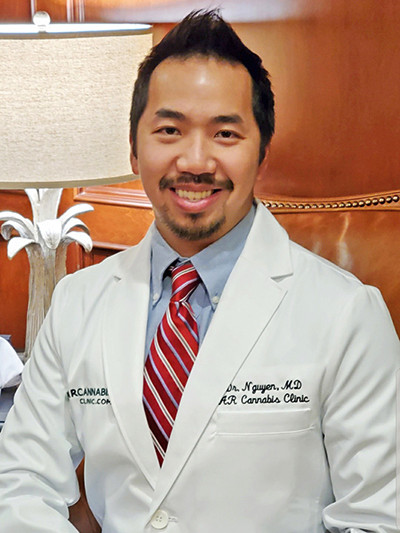
Nguyen, who runs the state’s largest chain of medical clinics offering cannabis evaluation and certification services, is amazed more patients don’t have cards.
“I can’t think of a single patient who’s come to me and said, ‘You know what, this medicine didn’t work,’” Nguyen said. “A very big majority already knew the medicine worked before they made an appointment. … I’m actually surprised that we don’t have more patients.”
Not that he’s complaining. He and Nichol are seeing a rush of patients scurrying to renew their yearly cards, not to mention a steadily growing number of new patients slowly won over by the expanding state program.
Nichol expects as many as 100,000 Arkansans to have their cards by the end of the year. “Certainly people are coming in regularly to renew cards; I’m seeing almost all of the people I saw in the beginning of last year. But I’m also seeing a lot of new business, and again, the patients typically are older. I have one patient who is 82 years old, or maybe she’s 84. Just a nice older woman looking for natural alternatives in pain management.”
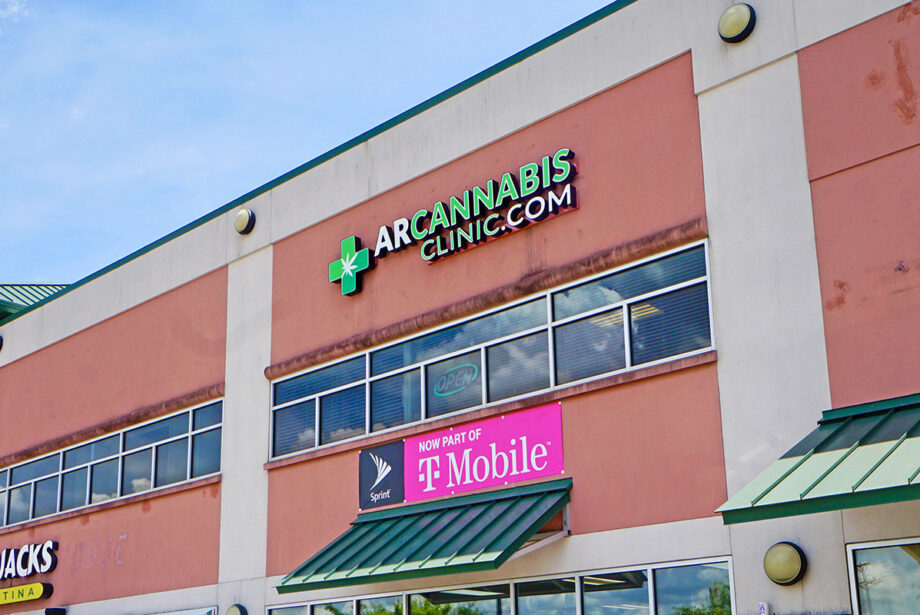
Nguyen’s 10 AR Cannabis Clinics statewide have seen tens of thousands of card seekers since opening 15 months ago. His west Little Rock and North Little Rock locations are among his busiest.
“I don’t have hard numbers, but I would say that we’ve probably seen the majority” of the 70,000 patients who have received cards, said Nguyen, a former ER physician who devoted himself totally to his cannabis practice as it grew. He didn’t reveal revenue figures, but said the company has 25 employees, including four full-time doctors, and a growing telemedicine practice energized by the COVID-19 pandemic.
Card Expirations to Resume
Nichol and Nguyen both report a rush of patients renewing their cards, which expire yearly and are available only to people diagnosed with one or more of 19 specified conditions. Card expirations were extended through Gov. Asa Hutchinson’s coronavirus emergency declaration. After some confusion last week over whether the expiration moratorium would be extended, the state said it would honor expired cards through Aug. 14.
The state Department of Finance & Administration, which oversees enforcement of the medical marijuana program authorized by statewide vote in November 2016, is certainly surprised by industry numbers, including the count of patients. “Actually it’s 69,500 as of today,” DF&A spokesman Scott Hardin said last Monday. “In looking at this program back before Arkansans approved the initiative in 2016, we anticipated a mature market that might be close to 40,000 patients. Today we are at roughly 70,000, so I do think it’s safe to say we’re all surprised.”
The pace of certifications has also picked up as more dispensaries have opened statewide, the doctors and Hardin agreed. “Dispensaries have opened, and another factor pushing up numbers is that due to COVID, patients now have the option of a telehealth visit not requiring an in-person appointment,” Hardin said. “Other Arkansans have waited to get cards, for whatever reason, but numbers are continuing to grow now that we’re at that point where everyone in the state is at least within a reasonable distance of a dispensary.”
The Game Changer
The state has 26 dispensaries in operation, with 11 yet to open, including five licensed in the last few months. “We’re going to have altogether 37,” Hardin said, including the original 32 licenses granted, one granted early this year and four new licenses approved by the Medical Marijuana Commission on July 1.
“A lot of patients have taken a wait-and-see approach,” said Nguyen, whose clinics are seeing roughly half their patients through telehealth visits these days. “They want to know how it works for their family members, their friends and neighbors. Some are a little bit hesitant, because, you know, we live in the Bible Belt and cannabis was illegal for so long.
“Telemedicine has made things easier for patients wanting to stay home,” Nguyen said, either fearing the virus or the stigma many still attach to marijuana. “The convenience is just a game changer. I would say probably about half our patients are now using telemedicine, and I believe that more awareness will mean more patients will choose it.”
The clinic chain is getting the word out with online marketing and dozens of billboards in 12 Arkansas markets, perhaps the most visible examples of the medical cannabis industry anywhere, since cultivators and dispensaries face strict advertising limits.
Millions in Tax Revenue
Nguyen said the American problem of opioid addiction drove him to establish AR Cannabis Clinics with his wife, Hannah, in April 2019.
“I worked in the ER full time for five or six years, and the opioid crisis was getting worse all that time. What everyone was overlooking was that patients could use alternative medicine, medical marijuana in particular, and get real help from it.
“At AR Cannabis Clinics, we’re all passionate about the mission. That’s one difference between us and other clinics that are just offering another service. I mean, this is all we do, and we go the distance in helping patients through the process and through the paperwork.”
The Arkansas Cannabis Industry Association website lists two dozen doctors offering consultations. At many offices, including Nguyen’s and Nichol’s, patients get one-on-one attention through the certification routine required by the Arkansas Department of Health, which due to the recent crush is taking up to two weeks to process new and renewed cards. Clinic employees will even walk patients through the process digitally on their smartphones.
The state, capitalizing on a new revenue stream, collects taxes on medical marijuana sales every day of the week: the regular 6.5% state sales tax and a 4% privilege tax benefiting the University of Arkansas for Medical Sciences.
“Arkansans have spent well over $110 million [on medicinal marijuana] over the last 14 months,” said Hardin, the state spokesman. “That has generated well over $7 million just in state sales taxes. And the 4% privilege tax provided roughly $4 million for UAMS. So the program is at a point now where it’s self-sustaining.”
 Sign up for Daily E-news