Little Rock’s comprehensive view of public safety includes more than police and fire departments, without diminishing their importance.
The city’s philosophy extends to aspects which impact the safety and livability of residents.
One such area is street lighting. Brighter streets and neighborhoods make people feel safer.
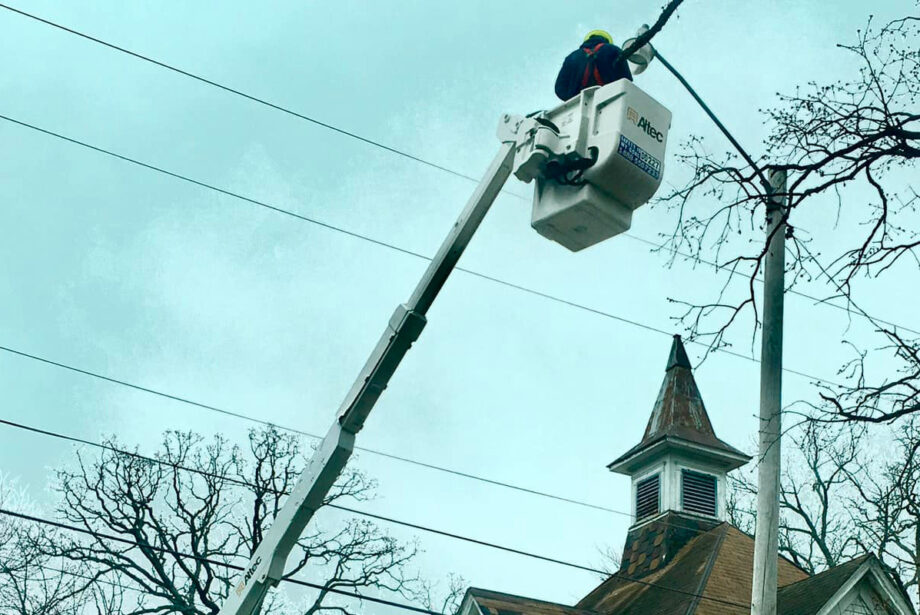
There are approximately 26,000 street lights within city limits and Little Rock owns and operates 2,000 in the greater downtown area. Entergy manages the other 24,000.
In public meetings, city staff would often hear complaints from residents about lights being out, but when the city looked into outage records, it was apparent that the darkened lights were often not being reported.
Little Rock’s new data governance committee began discussing ways data could be used to help residents. A day-long Data Academy showed residents of a given neighborhood how data could be helpful by convening them with city staff members to examine all manner of data, from income level to the prevalence of grocery stores.
In the brainstorming and conversations about improvements, the concept of marking and noting faulty street lights was identified.
A data analysis of the Midtown neighborhood showed that 22 street light repair tickets were issued, but a one-night volunteer reporting event identified 37 blacked out or dim lights.
It was time for Lights On, created as a way to call on neighborhood associations and community groups to organize concentrated street light canvassing.
The pilot project with the Midtown Neighborhood Association revealed figures that concluded residents were not reporting when lights were out in a timely manner. The neighborhood canvass on Oct. 22, 2018, revealed 37 tickets entered for lights out, versus 15 during the period of Jan. 1 to Oct. 21.
City staff launched the Lights On campaign and began meeting with other neighborhood associations to educate them on canvassing projects in their areas. The campaign has three steps: create canvass maps, learn what to report and to go canvass and report the results.
City data sets can be used in the time-consuming step of map creation, and city staff created a document with helpful hints. Marking tape is provided for canvassers to mark light poles and the city has helped to recruit volunteers.
When the program was enacted on Jan. 8 the Central High Neighborhood Association entered 38 tickets compared with 22 entered from Jan. 1, 2018, to Jan. 7 2019.
It became obvious there was value to actively working with neighborhoods and a need for more deliberate follow-up between the city and the utility was identified.
Entergy provided weekly reports, allowing the city to provide more timely updates to citizens and to work with Entergy on timely infrastructure upkeep.
Entergy also shares information on outages reported directly to the utility to allow for accurate tracking by the company and the city and to remove any duplicates from tallies.
There are at least two key outcomes from Lights On. Neighbors feel more engaged with their city and each other and they feel Little Rock is more responsive to their needs.
Through the program, Little Rock and Entergy have developed a closer relationship and neighbors have been given the opportunity to personally have a role in making their neighborhood safer.
 Sign up for Daily E-news