THIS IS AN OPINION
We'd also like to hear yours.
Tweet us @ArkBusiness or email us
When I used this space a year ago to contemplate the Eurasia Group’s list of 10 greatest global threats, I focused on the two that involved China. The coronavirus had barely penetrated our collective consciousness in early February, and it hadn’t been on the global trade consultants’ radar at all when its list was published in the first week of January 2020.
Instead, the threats from China were:
- “The decision by China and the US to decouple in the technology sphere”; and
- “Divergences between the US and China’s political structures.”
These threats were Nos. 2 and 3 on Eurasia’s 2020 list. The No. 1 threat founder Ian Bremmer and his staff perceived at the start of 2020 was one that I barely touched on in my column: the risk to American political institutions posed by an election “that many will view as illegitimate, uncertainty in its aftermath, and a foreign policy environment made less stable by the resulting vacuum.”
The coronavirus upended pretty much everything about international relations in 2020, but that top risk — a U.S. election widely viewed as illegitimate — arrived right on schedule. So I thought I’d check to see what Bremmer & Co. were worried about as 2021 dawned.
No. 1 on the list Eurasia Group published on Jan. 4 was “President Donald Trump’s refusal to accept the outcome of an election he declares was stolen is unique in American history, underscoring how divided the country has become — and will remain.” Two days later, we all saw how very serious that risk was, and the inauguration of President Biden doesn’t change this part of the identified risk: “Facing an aggrieved opposition loyal to the Trump brand, Biden will find it more difficult to govern than under the ‘normal’ conditions of split government.”
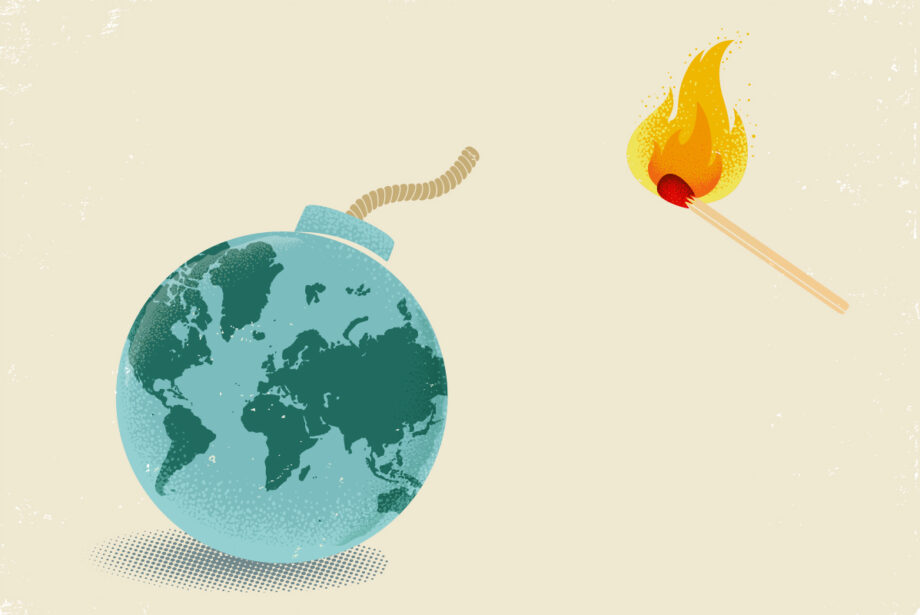
What else made the list this year? The long and wide-ranging impacts of COVID-19; climate change in a world devoid of international leadership; continuing tensions between the U.S. and China; and two separate risks presented by the globalization of data:
- “[A] slowdown or halt to the flow of sensitive data across borders will disrupt business models that rely on free flows.”
- A world in which “any computer or smartphone can be an entry point for malicious hackers and nation states and criminals act with near impunity.”
Eurasia Group is also concerned about oil, the Middle East and Europe after German Chancellor Angela Merkel leaves office later this year — underscoring just how many of the threats seem completely outside our individual or local ability to impact or even influence. (With the exception of Rep. Rick Crawford, Arkansas’ congressional delegation did avoid being part of the dishonest and ultimately deadly effort to deny Biden’s electoral victory.)
For encouragement, I turned to another annual message from a favorite thought leader: Larry Fink, CEO of BlackRock Inc., the world’s largest asset manager. In his 2021 letter to the CEOs of companies in which BlackRock invests — including many of Arkansas’ publicly traded companies — Fink found what he called “signs of hope.”
“We saw businesses rapidly innovate to keep food and goods flowing during lockdowns. Companies have stepped up to support non-profits serving those in need. In one of the great triumphs of modern science, multiple vaccines were developed in record time. Many companies also responded to calls for racial equity, although much work remains to deliver on these commitments. And strikingly, amid all of the disruption of 2020, businesses moved forcefully to confront climate risk.” (I added the emphasis to that last sentence.)
When the pandemic took hold in March, Fink wrote, “the conventional wisdom was the crisis would divert attention from climate. But just the opposite took place, and the reallocation of capital accelerated even faster than I anticipated.
“From January through November 2020, investors in mutual funds and ETFs invested $288 billion globally in sustainable assets, a 96% increase over the whole of 2019.”
While Eurasia may be correct that climate change is especially risky in a world without clear political leadership, Fink sees yet another area in which the business community has rushed in to lead when elected officials have hesitated.
We have seen this business-first phenomenon in disaster response, gun violence, racial disparity and, starkly, in the number of corporations that withdrew financial support for politicians who perpetuated the “stolen election” lie. And it is both laudable and disturbing: We should not have more faith in leadership with a for-profit mission than we do elected leaders entrusted with governmental power, but nature abhors a vacuum.

 Sign up for Daily E-news