Trying to inject new life into a beloved, if flagging, brand can be treacherous, as the recent Cracker Barrel debacle highlighted on a national scale.
But there are examples locally as well. Recently, the well-financed Barnaby Group of Little Rock reopened the Town Pump, a dive bar and burger restaurant in Little Rock’s Riverdale neighborhood. Social media reaction has been — unsurprisingly — mixed, with some lamenting that the Town Pump’s rough edges had been smoothed out and others celebrating the change.
And Sir Loin’s Inn II in North Little Rock, the revival of the legendary steakhouse Sir Loin’s Inn, lasted less than eight months before closing in July. A great name alone is not enough to keep diners coming.
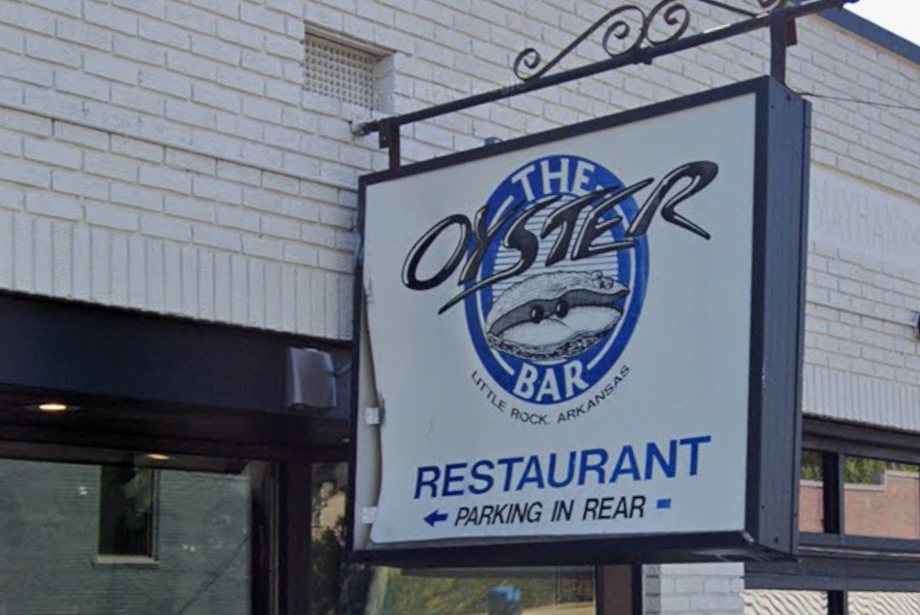
So I asked Chris Tanner, owner of Cheers in the Heights and Samantha’s Tap Room & Wood Grill, both in Little Rock, to weigh in on the challenge of taking over or reviving a landmark restaurant, specifically the Oyster Bar at 3003 W. Markham St. in the Stifft Station neighborhood of Little Rock.
Tanner bought the Oyster Bar from Virginia Boyd in 2019 and reopened his version in August 2020. Tanner’s Oyster Bar is a far cry from the old Oyster Bar, which first opened in 1975. He remodeled the space, making it lighter, brighter and certainly cleaner.
He also changed the menu, though the focus remains on shellfish and other seafood, as well as Cajun-inspired dishes.
Before the Oyster Bar became available for sale, Tanner said, he’d been researching fresh seafood and shellfish: “I wanted to take it to another level.”
“When I heard about that coming up for sale, and she was selling the property, then I got real interested. I grew up in Hillcrest. And I knew Virginia. I know Virginia from back when we were kids.
“Liked the restaurant. Didn’t love it. It was failing, just like Cheers was when I bought it. It was failing. So, bring it back to life. Are you going to piss some people off? Of course. But I can assure you, I’ve made 50 million times more happy than the ones I pissed off.
“I feel like I sank a lot of money into it, changed it, made it for the better. And I will put that raw bar in that restaurant — as far as the seafood, the quality and what we do to source — against anybody, especially in the Gulf.”
And though he declined to share Oyster Bar revenue figures for 2024, he said, “It was super good, especially because we’re only open five days a week.”
As for the Cracker Barrel controversy, it must be remembered that the restaurant chain’s management sought to make the now-discontinued changes because the chain’s customer traffic remained below prepandemic levels, and its customer base was growing older.
I asked Mary Mickel, co-founder of the AM Group, the Fayetteville communications agency that represents the Barnaby Group, among other restaurant-related businesses, what Cracker Barrel did wrong.
“I think they missed one key thing — ‘know your customer,’” she said. “Even if they are planning on a generational turnover of customers, the reason why customers go to Cracker Barrel is comfort and nostalgia. When you remove both from the equation, no matter the political timing, you are going to face backlash.”
And while some of the backlash was real, much was manufactured, according to a comprehensive article Oct. 24 in The Wall Street Journal. “The online anger against Cracker Barrel was partly stoked by fake social-media accounts, according to three firms that monitor and research online activity,” the Journal reported.
Ultimately, whether it’s a big chain like Cracker Barrel or an independent restaurant like the Oyster Bar, what will determine the success of a new take on an old brand will always be whether it attracts diners. The bottom line is the bottom line.
 Sign up for Daily E-news