
When it comes to demand for warehouse space nowadays, in many markets, smaller is better.
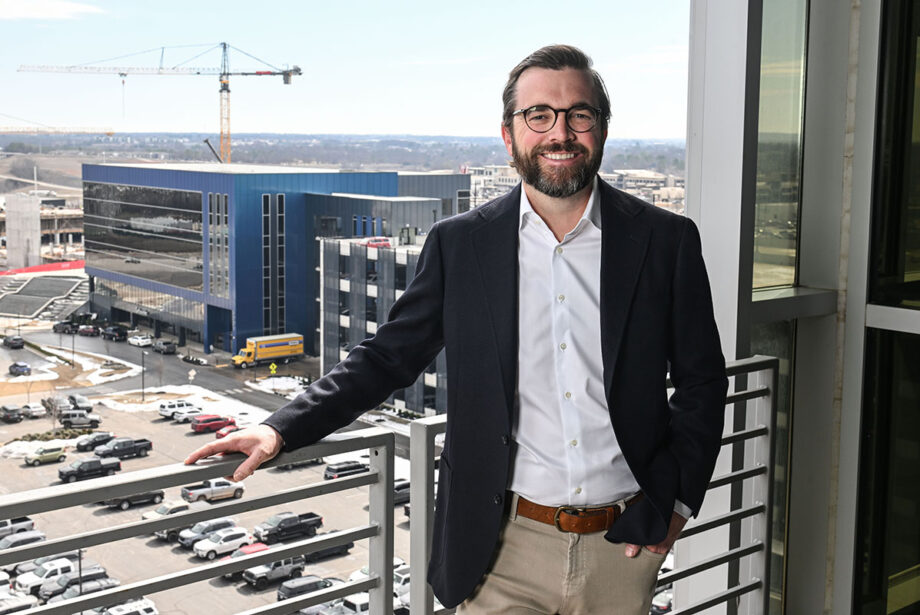
“The 10,000- to 20,000-square-foot spaces right now are where the most demand is,” said Ryan Gibson, managing director of Sage Partners’ Little Rock office. “The demand for the 100,000-square-foot-plus spaces that were so in demand during COVID has gotten very, very small.”
Marshall Saviers, Sage Partners’ CEO and principal, sees the same thing in northwest Arkansas.
The big warehouse heyday emerged during the pandemic as companies plunged into e-commerce to meet exploding demand for shipped goods. But the trend today is toward smaller warehouses that often include office space, showrooms and even covered outdoor storage.
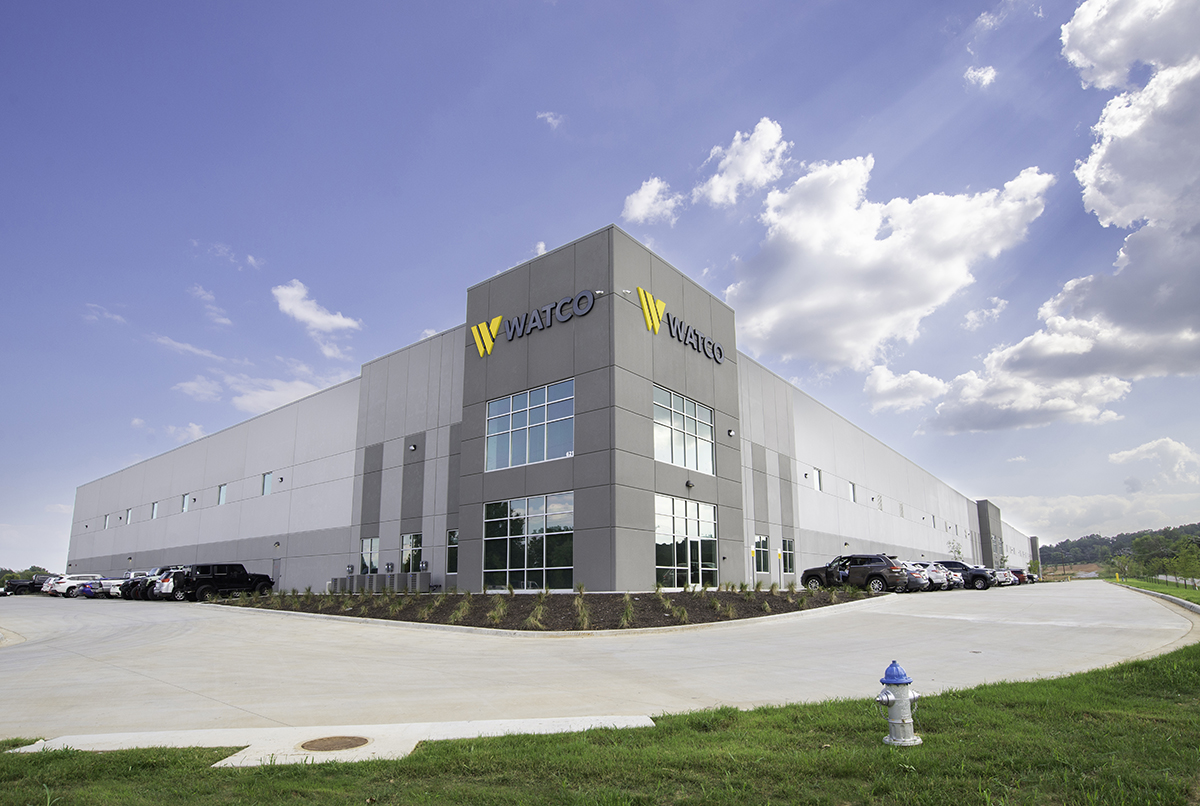
Saviers classifies these multiuse buildings as “flex” — spaces that run from 5,000 SF up to 30,000 SF or more. “A lot of companies have offices up front and might ship their products out the back or have a showroom where they can display their product,” he said. “We’ve been involved in a couple of developments that are in the middle of the market in northwest Arkansas.”
Drivers heading north out of Rogers on Interstate 49 can see several flex developments.
“Tenants can get signage on the interstate, plus warehouse space, plus offices,” Saviers said. “And for that they’re willing to pay a good rate, a rate that is higher than the normal warehouse rate, to get that visibility, to get that exposure, along with space that these companies can use to fit their needs.”
Most companies lease the flex buildings, at least those along the interstate.
“The companies that are choosing to buy smaller buildings are paying up,” Saviers said. “Those are going to be a little bit more off the beaten path, where they might need some yard space, which has also become a big deal. Companies are storing more and more outside if the elements don’t affect [the products] too much.”
A National Movement
The migration to smaller warehouse space reflects a national trend, according to The Wall Street Journal. Vacancy rates are at a historically low 3.9% for industrial spaces under 100,000 SF, the Journal reported last month, while larger facilities faced a 10.1% vacancy rate nationwide.
Average rents for flex buildings across the nation have soared 61% since 2019, surpassing $10 per SF.
“It’s a tale of two markets,” said Jason Tolliver of Cushman & Wakefield, the national partner of Sage Partners.
Leases on flex buildings in northwest Arkansas range from $11 to $14 per SF, Saviers said. “But actually, new flex buildings have to achieve the $14 per square foot range, which is a lot higher than buildings that were built pre-pandemic. This is all about construction costs, and you don’t have the economies of scale that you have when you build a big warehouse.”
Rates on existing warehouses above 100,000 SF range from $7 to $8 per SF in the area, Saviers estimated.
Prices are a bit lower in central Arkansas, Gibson said.
“Obviously it depends on the quality of the building, and then for anything that’s been built recently, construction costs have gone up considerably,” he said. “Some of the newer product is going to be in the $6.50 to $7.50 range per square foot.” Older warehouses of 100,000 SF and over might run in the $4 and $5 range in the Little Rock market, he said.
Companies seeking flex spaces are looking to “right-size,” Gibson said.
“I think some of them probably had too much space,” he said. “And I think there has always been a sweet spot in the flex industrial space, because it gives you a couple thousand square feet for offices, then room to store and ship things out. And if you’re able to store things outside, or need places to park a bunch of equipment or trucks, it’s ideal. A lot of equipment suppliers and businesses like that are coming into the flex space.”
Flooring companies and home goods companies prize flex showroom space, Saviers said. “On the showroom floor, you can come to one spot, pick out your flooring and the things you need for your house,” Saviers said. “It gives these tenants efficiencies, and if they need to ship things from one spot to another across northwest Arkansas, that’s an easy thing for them to do.”
A Crossland Specialty
Crossland Construction and Crossland Realty Group of Columbus, Kansas, are major players in northwest Arkansas’ warehouse sector, Saviers said. “They’re the largest contractor for industrial [projects] in the area, and they are also one of the biggest landlords. They own a lot of industrial space that we lease out for them.”

Crossland Director of Real Estate Mattie Crossland most frequently fields requests these days for spaces between 20,000 and 50,000 SF, she told Arkansas Business. “My layman’s opinion is that the population growth and needs for goods and services in the area are driving a lot of that. The electrical company that’s coming to work on your house, the HVAC company, building-trades type of companies — they are looking for that kind of space.”
She described the construction company founded by her grandfather, Ivan Crossland, as a top 100 contractor as ranked by Engineering News-Record. “At any given time, we have $100 million plus of industrial-type warehouse work being constructed. And then for Crossland Realty, specifically, we own around 3 million square feet of space in the market.”
She estimated that warehouse construction makes up about 15% of Crossland Construction projects in northwest Arkansas.
Fort Smith Is Different
The warehousing sector remains hot in Fort Smith, a regional shipping hub, according to Bob Cooper Jr. of Ghan & Cooper Commercial Properties. But the area isn’t yet a flex hotbed.
“There’s very little vacancy of any kind of warehouse in Fort Smith right now,” Cooper said. “And as soon as Class A warehouse becomes available, it’s generally leased right away.”
What about flex space?
“There are a couple of small projects, 5,000 square feet to 8,000 square feet, but nothing like what Marshall is talking about in northwest Arkansas, where you might have offices, showrooms and 50,000 square feet behind. We haven’t seen that. Our demand is more the warehouse-logistics type companies that need a place to store product in Fort Smith.”
Most tenants are looking for about 100,000 SF, Cooper said. “We get those calls on a regular basis. But we do find people looking for 200,000 and 300,000 square feet, because our space down here is generally a lot less expensive than other markets like Tulsa, northwest Arkansas or Little Rock.” Warehouse space available in the area generally runs from $3.50 to $5 per SF.
Saviers said smaller warehouses offer appealing economics in uncertain times.
“A lot of developers are saying, ‘OK, I don’t want to make a bet on a large industrial building,’” Saviers said. “But these smaller ones are more palatable to build from a cost perspective, and less risky. Plus, there seems to be more demand, and that makes them a really attractive development option.”
 Sign up for Daily E-news