THIS IS AN OPINION
We'd also like to hear yours.
Tweet us @ArkBusiness or email us
“Political consumers.” That’s how this column, in January 2012, referred to folks who not only “follow candidates and issue politics from one election to another, [but] routinely make consumer choices of products and services based on political or ethical considerations.”
Corporate social responsibility is a term applied to a company’s adherence to the letter and spirit of the law. It has also come to mean, in a broader sense, how a company and its leadership act based on corporate conscience — that internal guide to the rightness or wrongness of corporate or individual behavior.
The difference between right and wrong. Morality.
We also said in the 2012 column that “political consumerism demands more individual and corporate responsibility. Politicians and corporations have come to realize that consumers can be political animals who process their choices at the ballot box and in the store aisles based on lifestyles.” Hence the business strategy of cause marketing.
But it is now much more than that. And importantly so.
After the ugly sadness of Charlottesville, many felt President Trump’s non-scripted and off-teleprompter remarks starkly revealed his ignorance of the historical American character. I was among those many.
The reaction to the “many sides” and “fine people” improvisations was, at once, two-fold: support for the president among regressives, and those whose jobs rely on his largesse, or arraignment by political adversaries, latitudinarian interest groups and business leaders.
It is the third group, business leaders, that focuses our attention here. Business leaders in general, and corporate CEOs in particular, have an array of audiences to consider when making decisions about corporate culture, conscience, responsibility, behavior in the marketplace and the attributes associated with their brand. That audience includes employees, customers, shareholders and their representatives on the corporate board, vendors and broader stakeholders. Enlightened CEOs cast a wide net to garner backing from many influencers, including investors and consumers alike.
The collating of various interests, while sometimes a precarious balancing act because of the diversity of consumers, gave way when egregious statements came from no less than the president of the United States. Utterances from a head of state presuppose officialdom and policy. Serious stuff.
And so, it was significant when two presidentially appointed business advisory groups associated with economic policy and manufacturing unraveled. These Trump-chosen CEOs, through their actions and statements, affirmed moral principles upon which the country was built and which have long survived through social evolution. They, too, cloaked their companies with moral certitude. And escaped the president’s mantle.
Was this simply an exercise in risk management? Perhaps. However, there was a third choice: to do nothing. Inaction could have been considered tantamount to support.
CEOs from the following companies resigned, demonstrating their understanding of the character of the country: Merck, Intel, Apple, Ford, General Electric, Johnson & Johnson, Walt Disney Co., U.S. Steel, Under Armour, Tesla, AFL-CIO, 3M and others. After these resignations, both business advisory groups voted to disband.
Charitable organizations, too, are expressing themselves with their feet. No fewer than 17 nonprofits have walked away from events at Trump’s Mar-a-Lago resort, including the Salvation Army, American Red Cross and the Susan G. Komen Foundation.
This, too, shall pass?
The question mark is intentional. It’s our opinion that the repeated admonition to “move on” isn’t well considered. Charlottesville and other cities whose names have become bywords for social upheaval or tragic violence don’t need to be moved on from. They, instead, should be scrutinized and understood.
Consumers respond to corporate conduct. Consumers’ everyday lives are impacted more by business decisions — purveying the products they buy and the services they use — than by government. It is, however, the institutions of government, symbolized in the presidency, that foster a moral environment. And when that leadership becomes threadbare, the fabric of our corporate leadership strengthens.
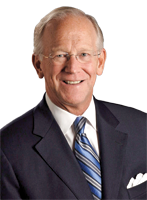 |
Craig Douglass is an advertising agency owner, and marketing and research consultant. He is president of Craig Douglass Communications Inc. of Little Rock. Email him at Craig@CraigDouglass.com. |
 Sign up for Daily E-news