


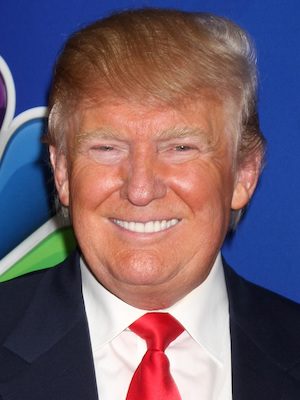
Donald Trump (file)
John Brummett put it succinctly: “Nate Silver was wrong. I was wrong. All the pundits were wrong.”
The Arkansas Democrat-Gazette columnist was writing on the election of Donald J. Trump, the November surprise that brought hand-wringing over a news media universe out of touch with the public. Silver is perhaps the best-known of the polling gurus who foresaw a Hillary Clinton victory.
Reaction to the failed predictions was seismic.
The New York Times published a letter to readers reaffirming its commitment to fair, deep reporting, a message that many saw as a mea culpa; Facebook began an internal examination of its role in the spread of fake news stories; and media critics far and wide denounced press failures and a fractured, decimated media landscape.
Here in Arkansas, journalists and media educators weighed in on a new media world where:
- Consumers can pick their news from outlets that bolster their views and ignore stories that challenge them.
- Fact-checking is rampant, but seems to have little effect on voters’ thinking or candidates’ rhetoric.
- Cost-cutting at news organizations may have left them too overwhelmed to reflect trends in the electorate or to counter misinformation and hoaxes.
A call is rising for clear, objective reporting — just the facts, ma’am — at a time when political journalists are vilified as biased and bullied at rallies.
“In the Trump era and going forward, journalists must continue fact-checking, but they also must be vigilant about not being used by any candidate,” said Donna Lampkin Stephens, a former Arkansas Gazette writer who’s now a journalism professor at the University of Central Arkansas. “It seems like both sides had journalists friendly to their campaigns, and that is dangerous.”
But Stephens and Max Brantley, senior editor of the Arkansas Times, said that the media shouldn’t bear all the blame. “A lot of people feel threatened by change and cultural markers — economics, immigration, sexual orientation, Black Lives Matter,” Brantley said, suggesting that many voters would have backed Trump regardless of the media’s performance.
“I place a great deal of responsibility on the voters, a large percentage of whom didn’t seem to do their homework,” Stephens said. “Too many people have a narrow media window. They only watch, listen to or read outlets that confirm the reality they want to see rather than relying on a wide spectrum of media choices and then making up their own minds.”
She related that to a lack of media literacy today, citing obvious hoaxes that many consumers believed. Even some of her students were duped, she said. “All of us — not just journalism educators — have a responsibility to teach critical thinking skills that will allow people to sort through the glut of information to determine what is true and what is not.”
The polls’ failure to predict the vote was stunning. “One of the pollsters who got it wrong was my brother, who works for an independent polling company in San Francisco,” said Kevin Bonner, general manager of Noalmark Broadcasting Corp.’s radio stations in south Arkansas. “He was pretty shocked. They were all pretty shocked.”
A 44-year broadcast veteran, Bonner said people now avoid and mistrust polls. “Sometimes they’re scared to say who they are going to vote for. You have to go deeper. Part of our responsibility as broadcasters and journalists is to make sure our information is accurate.”
Brantley said the polls actually were not far off and noted that Clinton did win the popular vote. He said voter suppression worked in some battlegrounds, and that the press fixated on “a largely empty story, emails,” in a way that “was extremely damaging generally and then specifically when [FBI Director James] Comey reopened the issue dramatically.”
A top New York Times editor confided to Outtakes that he believes the paper “did not do a good enough job learning what was going on in the country.” He said readers shouldn’t have been dumbfounded by Trump’s victory, and that political professionals and the media “had blinders on and did not believe Trump could win.”
Brantley isn’t so sure that Trump’s groundswell was overlooked or ignored.
“Currently, I reject the notion that the media missed the broad dissatisfaction among a segment of voters — non-college-educated whites in the lower and middle classes. We read about their estrangement so often that it became a cliche and a subject of satire.” He said they voted enthusiastically, and that was no surprise, either.
“But, hell, what do I know? I do note that Trump people, too, thought they were going to lose.”
 Sign up for Daily E-news










