The National Institutes of Health (NIH) has awarded UAMS researchers two grants totaling $3.4 million to study a stealthy virus linked to cancer.
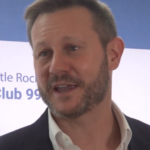
Mark Manzano, an assistant professor in the UAMS College of Medicine Department of Microbiology and Immunology, is studying how Kaposi sarcoma-associated herpesvirus (KSHV) causes cancer and how it evades the immune system. He received a five-year, $3.02 million NIH grant and is co-principal investigator on a two-year, $420,335 NIH grant.
Craig Forrest, a professor in the same department, shares the co-principal investigator role on the latter grant. Both Manzano and Forrest are members of the UAMS Winthrop P. Rockefeller Cancer Institute and the Center for Microbial Pathogenesis and Host Inflammatory Responses.
KSHV is known for its ability to go into hiding, a dormant state called latency, where it avoids detection while still quietly helping tumors grow, UAMS said in a news release. Understanding how the virus stays hidden, and how to shut it down, could one day lead to new treatments or even ways to eliminate it entirely.
“This virus is like a master of disguise,” Manzano said in the release. “It doesn’t need to cause mutations like many cancer-causing agents. It brings its own cancer-causing genes and reprograms the cell.”
KSHV is most often associated with Kaposi sarcoma, a rare cancer that mostly targets people with weakened immune systems, such as those living with HIV and post-transplant patients. It often first appears in the mouth as painful oral lesions, and it affects the skin, lymph nodes and internal organs. It is also linked to other illnesses such as primary effusion lymphoma and multicentric Castleman disease.
Manzano sees the long-term goal of his research as finding a way to either silence the virus permanently or eliminate it from the body altogether. One promising strategy could involve targeting an RNA molecule.
“We might be able to develop an antisense therapy, something that binds to the RNA and triggers the cell to destroy it,” he said. “That technology already exists; the question is whether we can adapt it to target this virus.”
Manzano believes a vaccine may be more feasible in connection with the proteins produced during viral reactivation, which is the focus of Forrest’s work and a potential angle for future prevention efforts.
 Sign up for Daily E-news