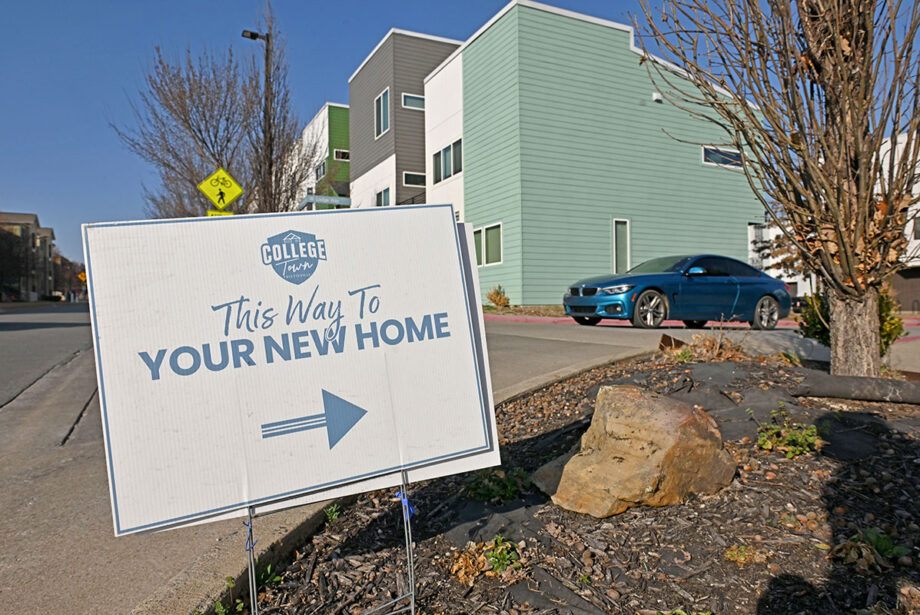
Continued enrollment growth at the University of Arkansas at Fayetteville, the system’s flagship campus and the state’s largest, has spurred some flashy investments in the housing market.
Three of the four largest commercial real estate deals in Washington County last year involved student housing apartment complexes in Fayetteville. The Fayetteville market now includes some of the biggest players in the student housing industry.
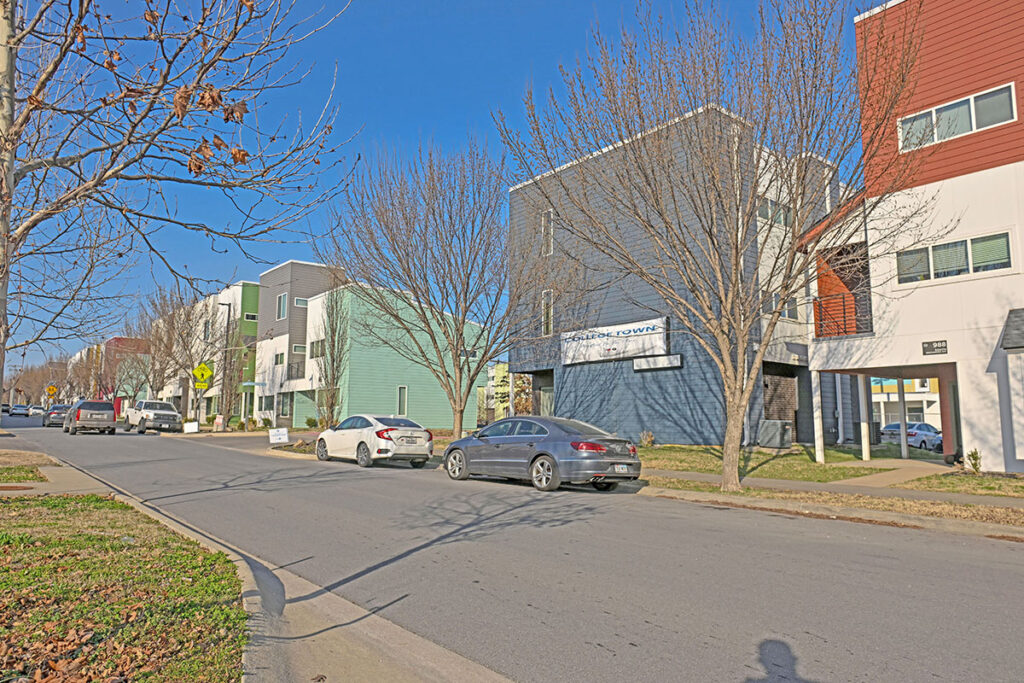
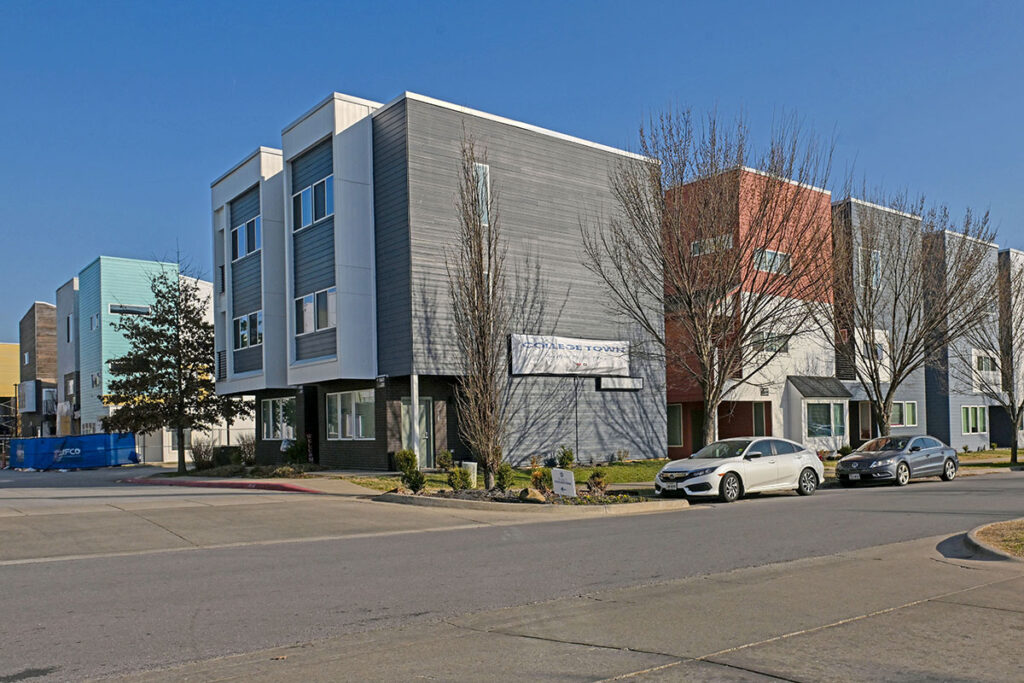
In October, Harrison Street of Chicago, the nation’s third-largest student housing company, paid $34.7 million for the 180-unit Vue complex on Stadium Drive, a stone’s throw from campus. Tailwind Group Inc. of Mankato, Minnesota, was a big investor in the market in 2023, spending more than $81 million for the 270-unit Spectrum Apartments on Crowne Drive and the 213-unit Ozark Villas on Beechwood Avenue; Tailwind renamed the complexes the Landing at Fayetteville and College Town Fayetteville, respectively.
“We are excited to add another student housing asset in Fayetteville,” Tailwind President Lane Gravley said after the company paid $39 million for Ozark Villas in December. “It’s one of the premiere markets in the country and we see continued upward momentum.”
The student housing market responds to the same supply-and-demand pressures as the general housing market in Fayetteville and greater northwest Arkansas. The region’s strong economic base has fueled population growth and made affordable housing scarce for at least the past decade.
The University of Arkansas had an enrollment shy of 15,000 as recently as 2008. In October 2023, it announced official enrollment for the 2023-24 school year of 32,140.
More than 6,300 of the 2023 students were incoming freshmen, a drop from the record 7,096 the previous year. The university has 6,200 beds on campus in 20 facilities.
UA Enrollment
Fall enrollment at the University of Arkansas at Fayetteville
Year |
Students |
|---|---|
| 2023 | 32,140 |
| 2022 | 30,936 |
| 2021 | 29,068 |
| 2020 | 27,562 |
| 2019 | 27,559 |
| 2018 | 27,778 |
| 2017 | 27,558 |
| 2016 | 27,194 |
| 2015 | 26,754 |
(Source: University of Arkansas)
The university requires all freshman students who are single and under the age of 21 to live on campus, with a few exceptions. But as enrollment numbers soar, the UA finds that it simply does not have enough beds for all the incoming freshmen and returning students who want to stay in campus housing.

“The stress it puts on housing is we are not able to house all of the students who would like to live with us,” said Jon Shaffer, the assistant vice chancellor for university housing. “There is a finite number of beds, and that has not been possible.”
The alternative for many students is finding an apartment off campus, and that can mean state-of-the-art student-specific units heavy on amenities.
Shaffer said the university partners with third-party companies such as Tailwind to help house students. The UA has reserved more than 700 beds for its students at College Town and three other student housing complexes off campus.
College Town’s monthly rates range from $865 per bed to as much as $1,465, while students can rent through the university for $7,421 for the 2023-24 academic year of 10 months. Those rates were scheduled to increase to almost $10,000 a year in 2024-25; rates at other partnered complexes will be higher.
The university’s 19 dorms have a range of rates for 2023-24 depending on the dorm and whether it is single or double occupancy. Single occupancy for most is more than $9,000, with double occupancies leasing for in the $7,000s. Higher-end dorms such as Adolphi and Founders charge above $11,000 per academic year for single occupancy.
To get the student rate, UA students must go through the university housing department, which handles all the paperwork and logistics. Leases through the university also include utilities.
“We are essentially using their complexes as on-campus housing and treating those students as if they live on campus,” Shaffer said. “Those agreements say we are going to rent X number of apartments at X rate, and then we handle all the details past that. They are doing us a favor by helping us out. They wouldn’t necessarily have to.
“It’s a win-win. It guarantees those places are full; they don’t have to market them and do all the contracting for it. There is mutual benefit there.”
Neither the student rate nor the traditional rate is cheap. According to a recent study by the National Multifamily Housing Council in Washington, D.C., rents for “purpose-driven student housing” increased 25% between 2013 and 2020; rents for “student-competitive” housing increased 30%.
The NMHC said purpose-driven housing refers to specific units for university students, while competitive housing are units within 3 miles of campus that are regularly but not necessarily rented by students.
Student Housing
Fayetteville student housing complexes sold in the past two years
Property |
Address |
Sale Price |
|---|---|---|
| The Landing at Fayetteville | 1741 Crowne Drive | $42.1 million |
| College Town | 870 Beechwood Ave. | $39 million |
| The Vue | 1111 Stadium Drive | $34.7 million |
| Champions Club | 1629 S. Razorback Road | $11.92 million |
| SoFay Lofts | 1725 W Bedford Loop | $6.6 million |
| The Reserve on Cato Springs | 1140 W. Cato Springs | $5.3 million |
(Source: Washington County real estate records)

For instance, the Links at Fayetteville, an apartment complex just off Wedington Drive and owned by Lindsey Management, has a large student clientele but also has plenty of nonstudents. It is on the UA bus route so it is convenient for students, while lease rates range from $865 monthly to more than $1,000.
“There are a lot of kids who like to live closer to campus,” said CEO Lyndy Lindsey. “I know that is a big-time draw to live close to campus so you can walk. A lot of our stuff is on the bus route and that really helps [get] people to live with us.”
There is no shortage of national companies in the Fayetteville student housing market.
The Scion Group of Chicago, the nation’s second-largest student housing company, owns three properties surrounding the UA campus, including the 633-bed Alight Fayetteville complex on South School Avenue, for which it paid $29 million in 2021. The seller was Harrison Street.
Scion also paid $42 million for the University House complex in 2013.
Landmark Properties of Athens, Georgia, owns two student housing complexes in Fayetteville that total 335 units and more than 1,100 beds.
Seeking Modern Amenities
Jason Trenary said the market is strong for student housing because of the enrollment growth of the UA and the tight housing market overall. In the past, older students might have found a rental home to live in. Now, however, students are more likely to look for a modern new build, said Trenary, a commercial real estate adviser with Capstone in Rogers.
“The demand from the university and the lack of adequate housing available makes it [the market] desirable,” Trenary said. “A lot of the housing out there is older space that is being used. The new amenities that students are seeking are not available in many cases. Students now are looking for more tailored space.”
Those tailored spaces aren’t cheap, especially with the rising cost of construction projects across the board in recent years. Lindsey said that when a market gets hot, it is tempting to jump into it, but that’s not really possible with housing: Elaborate 200-unit apartment complexes can’t be built overnight.
According to Yardi Matrix, a commercial real estate analysis firm in Scottsdale, Arizona, national occupancy rates for student housing reached 94.6% in September 2023, which was actually a slight drop from 96.2% the previous year. Rents increased 6.6% in 2023, the company said in a November report.
The report said the University of Arkansas was one of a handful of schools that had enrollment of more than 30,000 with a 99% occupancy rate or better and annual rent increases of more than 20%. It also said there were 10,063 student housing beds in 18 off-campus complexes and that preleasing — reserving spaces in advance — had increased by 24.4% in 2023.
Shaffer said the university has done a good job recruiting and retaining students and that “double whammy” makes housing a challenge. It’s a good challenge to have because it beats the alternative of declining numbers.
“These properties that are close to campus fill up pretty quick and the demand is pretty high,” Shaffer said. “Nationwide there are a lot of schools whose enrollment is diving faster than we are growing. The fact that Arkansas is growing at a time when a lot of schools are really shrinking says something about the education and the product Arkansas puts on the table. People want to come here.”
 Sign up for Daily E-news