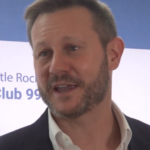
With last week’s announcement of a U.S. Steel expansion on the way in Osceola, the keynote address from CEO David Burritt at the Arkansas State Chamber of Commerce’s 97th annual meeting was largely focused on the steel giant’s future in Mississippi County.
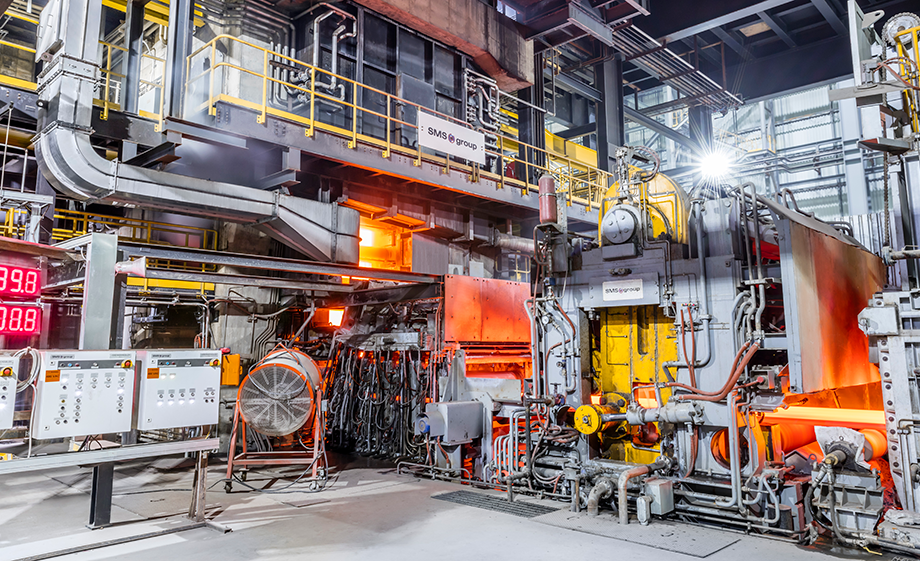
The new direct reduced iron (DRI) plant, combined with planned upgrades to allow for the capacity to produce grain-oriented steel, is a $3 billion investment in the county. That’s in addition to the $7 billion the company has invested in Big River 1 and 2.
Grain-oriented (GO) steel has magnetic properties for use in transformers, electric motors and other energy systems.
The two projects — the DRI facility and GO steel upgrades — address both the raw material side and customer side of the business, Daniel Brown, SVP of advanced technology steelmaking and COO at Big River Steel, said in a joint post-meeting interview with Burritt.
The DRI facility will allow for cost-competitive and sustainable materials for melting steel, and the GO capabilities are important for producing the steel needed for the future of infrastructure.
Impact of New Ownership
Burritt said in the keynote that 2026 would be a major year for Pittsburgh-based U.S. Steel and therefore for Arkansas, as the company fully integrates its partnership with Tokyo-based Nippon Steel. Big River 2, which just opened this year, is also set to reach full production capacity around the beginning of 2026.
But Nippon has already had an impact on steelmaking in the state, Brown said in the post-meeting interview.
“The partnership was finalized in June and we actually had engineers from Nippon and technical specialists on site in July,” Brown said. He said Nippon has “fast-forwarded” Big River’s technology by at least six months.
Nippon is also important for the company in terms of its expertise in automotive and GO steel.
“They are experts in the electrical steel and the GO electrical steel process that we’re going to have in the future,” Burritt said in the interview. “We really don’t have any grain facilities in the United States that do that. They’re already having some enhancements for us. They are experts in steel making. They’re bringing us that technology.”
As for the DRI expansion, the company has not yet broken ground in Osceola, but Burritt said in the interview that the company has the permits and the project is “well underway.” He also said the project legally has to have the spend and commitment done by the end of 2028.
There’s a “need for speed,” he said. And though he acknowledged the challenge of finding construction workers, he noted that Big River 2 was still able to open for business in just 28 months.
“This is the quickest startup of any three-million-ton greenfield site in the history of the North American steel industry,” Burritt said in his keynote. He also said BR2 was the largest private investment in Arkansas’ history and the largest investment in U.S. Steel’s history.
U.S. Steel also owns the iron that will be used at the DRI plant. Brown said U.S. Steel is the only steel company in North America that owns mine sites for iron ore pellets. The company did a $140 million upgrade to its Keetac mine near Keewatin, Minnesota, in 2023.
“We’ll get those iron ore pellets from Keetac, send them to Big River and use them to make our own steel and the electric arc furnaces at Big River,” Brown said.
Burritt said in the interview that the Keetac mine is especially important because “Let’s face it — God’s not making any more iron ore ranges.”
Economic Impact
In a U.S. Steel fact sheet shared with Arkansas Business, the company had an estimated economic impact on the state of $2 billion in 2024. The company supported 4,725 jobs and paid $45.2 million in state and local taxes.
The company also worked with 541 Arkansas-based suppliers.
The increase in impact was a rise of 432% from 2022, which the fact sheet attributed to expanding operations and capital projects, increased sourcing from Arkansas suppliers and a rising demand for sustainable steel products.
In addition to direct business impact, U.S. Steel has also made large social contributions to Mississippi County. In 2023, the company donated $425,000 to the South Mississippi County Regional Medical Center’s emergency room, which was damaged by flooding. The grant was also used to buy equipment and construct a helipad.
In 2024, U. S. Steel contributed $1.1 million directly to community causes. In addition, employees contributions of volunteer hours and charitable giving is valued at approximately $1.5 million.
Brown and Burritt said in the interview that investments in the local community will absolutely continue as the company expands its presence.
Burritt said that the $3 billion investment and future plans were made possible because of Nippon “never giving up” on the deal and President Donald Trump’s support.
“How many times do you hear a couple presidents are against your deal, and one you have to sue, and the other one you have to convince in the Oval Office that this is a good thing,” Burritt said in the interview.
With Nippon, Burritt said U.S. Steel will someday be the third-largest steel company in North America, working toward the second. It’s currently the fourth.
“The future is incredibly bright in terms of profitable growth, jobs, jobs, jobs,” he said.
 Sign up for Daily E-news