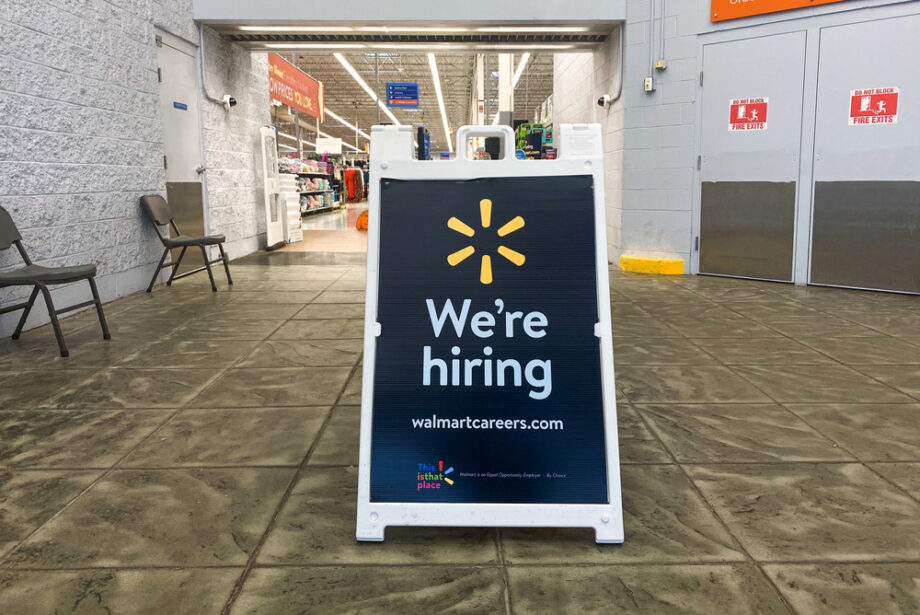
As the world’s largest company by revenue — $573 billion in fiscal 2022 — Walmart Inc. knows payroll economics. The Bentonville retailer is devoted to paying more to get good employees these days, and it will most likely have to keep up the effort.
That’s the assessment of Kenneth Dau-Schmidt, Carr Professor of Labor and Employment Law at Indiana University in Bloomington. He told Arkansas Business last week that the American economy faces “the first low-wage labor market favorable to workers since the 1970s.”
Walmart says the average nationwide pay for its associates is above $17 an hour, but as the professor said, starting pay in many parts of the larger economy has reached $15 an hour. By way of comparison, Costco raised its minimum pay twice last year, promising $17 an hour, and Target Corp. set a minimum wage range in February from $15 to $24 per hour, depending on position.
“There are two countervailing economic effects impacting Walmart’s labor market,” Dau-Schmidt said. “One is the continuing decline of brick-and-mortar retail in favor of online shopping, which has accelerated during the pandemic.” As a result, Walmart may need fewer retail clerks but more online order fulfillment workers. “The other is simply the relative scarcity of low-wage workers in the aftermath of the pandemic.”
He noted that 2 million to 3 million older workers retired early, and other workers left jobs to raise their children. “Also, the flow of newly trained employees was interrupted,” Dau-Schmidt said. “As a result, most service and in-person businesses find themselves short of staff.”
Historically, it’s quite a reversal in the labor market, he said. “We have not seen a labor market this favorable to workers since the 1970s. From about 1980 until recently, the low-wage labor market had generally been stagnant or in decline due to the outsourcing of work overseas. And workers saw generally flat or decreasing real wages and benefits.”
 Sign up for Daily E-news