THIS IS AN OPINION
We'd also like to hear yours.
Tweet us @ArkBusiness or email us
“Hold the phone” was the subject line on an email I received last week from a coworker who had just realized that his family would be eligible for a monthly child tax credit as part of the American Rescue Plan that the Democratic majority in Congress enacted last week. While most people seem to have focused on the immediate stimulus payments, most parents of minor children will also get a continuing benefit from the additional $1.9 trillion our government will be borrowing.
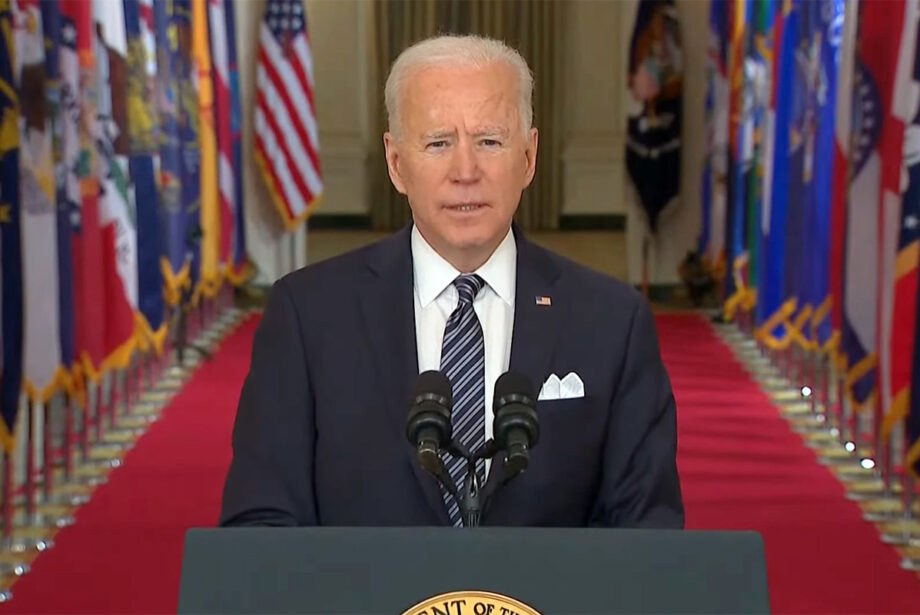
The ARP is far more sweeping than just the $1,400 per person that households earning up to $160,000 will receive. President Biden was scheduled to address the country about the contents of the legislation on Thursday evening, but at this writing, the Democrats have done a typically poor job of messaging.
Of course, Arkansas has no Democrats in Congress who would be eager to tell constituents what President Biden and the Democrats are doing for them. In a press release, Rep. Steve Womack pointed out that “only 9% of the legislation’s spending goes towards coronavirus health programs — with just 1% for vaccines,” while the rest, he said, “funds far-left political priorities unrelated to the pandemic.”
Far-left is in the eye of the beholder, but Womack didn’t feel like mentioning specifically what those political priorities were. It might be uncomfortable to issue a statement proudly announcing opposition to cutting the child poverty rate in half — which is what the Center for Poverty & Social Policy at Columbia University says the ARP will do, at least temporarily.
Arkansas has one of the highest rates of child poverty — 22.1% in pre-pandemic 2019, compared with the national average of 16.8% — so Womack’s state stands to benefit more than most. And when $250 or $300 per child starts flowing in every month, beneficiaries are going to notice. And maybe, if Arkansas’ congressional delegation isn’t too specific about what they voted against, some of their constituents will mistakenly assume that they have their senators and representatives to thank.
Here’s what a prominent Arkansas businessman — a name you would recognize — told me in an unsolicited text message last week:
“Only a few appreciate that Arkansas, already a net importer of federal money, is a big winner per capita in the Rescue Act. The child payment could be transformational for low income [families].”
Transforming low-income families and reducing child poverty clearly have not been priorities for the Republican Party. Jennifer Rubin, the most conservative (pre-Trump definition) columnist working for the Washington Post, last week contrasted the impact of the $1.9 trillion tax cut that was the Republican political priority in 2017 with the $1.9 trillion American Rescue Plan of 2021.
“About a quarter of the Biden plan — compared to 1 percent of the tax cuts — will go to the bottom 20 percent. Only 11 percent of the rescue plan goes to the top 20 percent, compared to 65 percent of the tax cuts,” Rubin wrote. “Plus, even the money in the rescue plan going to the top 20 percent is limited; married couples making more than $160,000 are not eligible for $1,400 stimulus checks.”
Republicans make a big distinction between spending (what the ARP does) and cutting taxes (what the 2017 Tax Cuts & Jobs Act did), but it’s a distinction without a difference when the money has to be borrowed either way.
“Republicans’ hypocritical concern about the cost of spending but not the cost of tax cuts conveys a willingness to increase federal debt for the sake of those already well off,” Rubin wrote.
(Being much better at messaging, Republicans sold their political priority — every bit as partisan as the Democrats’ — as a tax cut that would save the average household $1,600 a year in federal income taxes. Averages are handy that way. In practice, only households earning close to three times the median would enjoy anything close to that average savings, and the higher the income, the bigger the benefit.)
Not being particularly ideological, I’m less bothered by the wealth redistribution of the American Rescue Plan than I am by all the borrowing. Debt just makes me squeamish. Still, I would rather borrow to help lower and middle-income households during a pandemic than to further enrich the wealthiest during “the best economy ever.”
The direct cash benefit to most families with children will be an interesting experiment. A small-scale experiment with direct payments to low-income families in Stockton, California, showed some encouraging early results, including more of them becoming full-time employees. And I think we can all agree that the best anti-poverty program is still a job.

 Sign up for Daily E-news